
A medical certificate is a professional statement issued by an appropriately licensed healthcare practitioner after a genuine assessment. It may confirm that a person was medically unfit for work or study, describe functional restrictions, support leave, or address another authorized purpose. It is not a form that a patient or employer should complete and sign on a clinician’s behalf.
These six medical certificate templates are provided for legitimate administrative reference. Requirements vary by jurisdiction, workplace, school, insurer, regulator, and clinical profession. Healthcare organizations should use approved forms, current law, professional standards, and secure records-not an unreviewed generic download.
Important: Never alter, fabricate, backdate, purchase, or use a false medical certificate. Misuse can harm patients, breach privacy, undermine safety, and lead to disciplinary, civil, regulatory, or criminal consequences.
Who May Issue a Medical Certificate?
The authorized professional depends on the purpose and local rules. It may be a physician or another licensed practitioner acting within scope. Some organizations accept certificates from several professions; others prescribe who can certify a particular condition, fitness decision, or period.
The clinician must make an independent professional judgment based on an appropriate consultation or assessment. An employer, patient, school, or template should not dictate the medical conclusion.
Medical Certificate, Sick Note, and Fitness Statement
A sick note commonly supports short absence. A fit note or fitness-for-work statement may address whether a person is unfit, fit, or able to work with restrictions. A medical report may contain more extensive history, findings, or opinion and may require separate consent and fees.
Use the document type requested by the applicable policy or authority. A brief certificate should not be stretched into a specialist assessment, disability accommodation decision, return-to-work clearance, or legal-medical report without the appropriate process.
Minimum Necessary Information
A basic certificate may include:
- Patient’s name or other approved identifier
- Date of consultation or assessment, where appropriate
- Statement relevant to fitness, absence, or restrictions
- Period covered and review date where needed
- Date the certificate was issued
- Practitioner’s name, qualification, registration details, and practice contact
- Practitioner’s signature or approved digital authentication
- Document or verification reference where used
Include a diagnosis only when necessary, lawful, professionally appropriate, and supported by valid patient consent or another legal basis. Employers often need functional information and expected duration rather than detailed clinical history.
Protect Patient Confidentiality
A medical certificate contains sensitive information. Discuss what will be disclosed, who will receive it, and why. Use the least information necessary for the legitimate purpose. Do not add symptoms, treatment, medicines, test results, or unrelated history merely because the template has space.
Give the certificate to the patient or transmit it through an authorized secure method. Confirm the recipient before sending. Avoid ordinary email, shared devices, open printer trays, or unsealed envelopes when they create inappropriate exposure.
Dates and Period of Incapacity
State dates unambiguously and use a consistent format. Distinguish the consultation date, issue date, first day affected, anticipated last day, and review date. Avoid unclear phrases such as “for one week” when the exact period can be stated.
Retrospective certification may be permitted only under defined professional and legal conditions. A practitioner should never backdate the issue date. If providing an opinion about an earlier period, identify the actual issue date and the basis and limits of the retrospective opinion.
Functional Restrictions
When appropriate, describe what the person can or cannot safely do rather than disclosing a diagnosis. Examples might address lifting, standing, driving, operating machinery, exposure, hours, remote work, breaks, or the need for reassessment.
Restrictions should be clinically justified, specific enough to use, and limited to an appropriate period. The employer remains responsible for assessing workplace hazards and deciding whether proposed adjustments are feasible and lawful.
Return-to-Work and Fitness Decisions
Return-to-work documentation may require knowledge of the actual role, environment, hazards, and essential duties. “Fit for work” without context can be misleading. Safety-critical jobs, infectious disease, regulated professions, occupational injury, disability accommodation, and complex illness may require occupational health or specialist assessment.
A general template cannot make the decision. Use qualified professionals, job information, risk assessment, and current rules.
Employer Responsibilities
Employers should define how certificates are submitted, who may access them, how absence is recorded, and how records are retained. Managers should not demand unnecessary diagnoses or circulate certificates broadly.
Check authenticity through a lawful, privacy-respecting process. Contact the practice using verified public details rather than information supplied only on the document, and obtain appropriate authority before requesting confirmation. Verification may confirm issue and authenticity without disclosing additional clinical information.
Clinician Documentation
The clinical record should support the certificate: consultation, relevant history and assessment, professional judgment, advice, dates, disclosure discussion, document issued, and recipient or delivery method. Keep a copy or auditable record under applicable retention requirements.
If the certificate is corrected or replaced, preserve the original record, identify the reason, and link the new document. Do not silently overwrite a signed certificate.
Security Features
Organizations may use controlled stationery, unique numbers, QR or portal verification, digital signatures, professional registration identifiers, watermarks, or audit logs. These features support verification but do not replace a genuine assessment or professional accountability.
Restrict access to templates, signature images, stamps, practitioner credentials, and issuing systems. A scanned signature pasted into an editable file is easy to misuse and should not be treated as secure authentication.
Telehealth Certificates
A remote consultation may support certification only when the clinician can make an adequate assessment within professional, legal, and technical limits. Identity, location, consent, history, observation, and follow-up may need to be confirmed.
Telehealth is not appropriate for every condition or fitness question. The practitioner should arrange in-person review, emergency care, tests, or referral when the available information is insufficient or safety requires it. The certificate should not imply an examination that did not occur.
Medical Certificates for School or Sport
Schools, universities, clubs, and event organizers may request documentation for absence, participation, accommodations, or return after illness or injury. The purpose should be clear. A general absence certificate is not automatically a sports clearance or a statement that a person can safely perform every activity.
Participation assessments may require history, examination, tests, knowledge of the sport, and current guidance. Use the institution’s authorized process and appropriate clinical expertise.
Travel and Insurance Certificates
Travel cancellation, airline fitness, vaccination, medication carriage, and insurance claims often use specific forms and evidence. A generic medical certificate may not be accepted. Confirm the recipient’s requirements, deadlines, consent, and scope before the assessment.
A practitioner should state only what can be supported, distinguish patient-reported facts from clinical findings, and avoid giving an opinion outside competence. Insurance or legal reports may require a separate process.
Amending an Incorrect Certificate
If a name, date, restriction, or statement is wrong, the issuing practice should correct it through an approved process. Mark the original as replaced or canceled, preserve the audit trail, authenticate the new document, and give it to the authorized recipient.
Patients and employers should not edit the file themselves. Even an apparently harmless date change can alter the professional meaning and invalidate verification.
Template Customization for Healthcare Organizations
Use organization-approved branding and include the practice’s correct legal and contact details, practitioner identity and registration, issue date, patient identifier, purpose-specific statement, period, review information, signature method, privacy notice where appropriate, and verification reference.
Remove unnecessary diagnosis fields. Lock declaration wording and fixed elements where practical. Test long names, multiple date formats, digital and print delivery, assistive technology, and the verification process. Keep the master in a controlled system with version and approval records.
Common Medical Certificate Mistakes
- Issuing without an adequate genuine assessment
- Using a professional title or registration incorrectly
- Backdating the issue date
- Disclosing a diagnosis when it is unnecessary
- Writing vague or impractical restrictions
- Certifying fitness without understanding the activity or role
- Sending the document to an unverified recipient
- Leaving signature images or templates accessible
- Correcting a finalized certificate without an audit trail
- Failing to retain supporting clinical documentation
Questions a Recipient Should Ask
Is this the correct document for the policy? Does it cover the relevant period? Are functional restrictions clear enough to assess work or study safely? Is additional consent needed before contacting the issuer? Who may see and retain the document?
The recipient should not use verification as a way to seek extra clinical information. If the statement is unclear, request clarification through an authorized, privacy-respecting route.
Legal and Professional Caution
Certification standards, sick-leave evidence, disability rights, privacy, consent, professional scope, electronic signatures, retention, and verification vary by jurisdiction. Requirements can also differ across employers, schools, insurers, courts, licensing bodies, and public agencies.
This page is general administrative information, not medical, legal, employment, insurance, or regulatory advice. Patients should consult qualified healthcare professionals; organizations should use current official rules and professional advisers.
Final Check Before Issue
- Confirm identity and the purpose of the certificate.
- Ensure an adequate assessment supports the opinion.
- Use the minimum necessary patient information.
- Check every name, date, period, and restriction.
- Confirm practitioner details and authority.
- Authenticate the final document securely.
- Record the issue in the clinical file.
- Deliver it only to the patient or authorized recipient.
A well-designed certificate supports communication, but its legitimacy comes from professional assessment, truthful content, lawful disclosure, and secure issuance.
Preview and Download the Medical Certificate Templates
The six original previews are preserved below. The external examples display their original buttons without active destinations; the final Word document remains hosted on this site. These files are for legitimate administrative reference only.
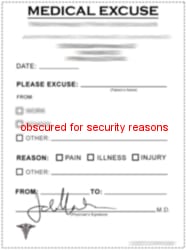
Medical Certificate Form
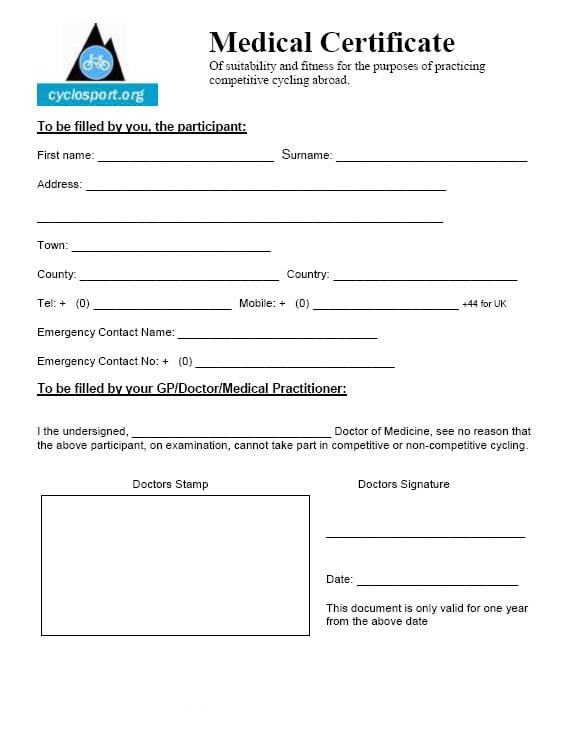

Doctor’s Medical Certificate Sample
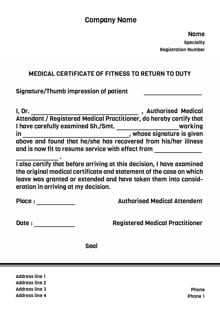
Medical Absence Certificate
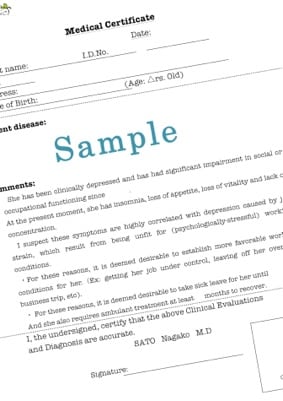
Printable Medical Certificate
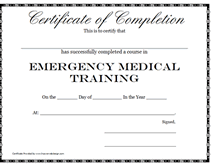
Medical Fitness Certificate Example
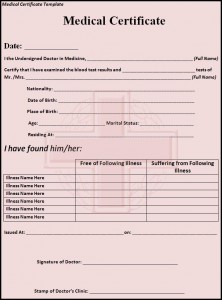
Editable Medical Certificate Template

Medical Certificate Template FAQs
Who can issue a medical certificate?
An appropriately licensed practitioner acting within professional scope and the applicable local rules.
Can a patient fill in and sign the template?
No. A medical certificate must reflect a genuine professional assessment and authorized issuance.
Must the diagnosis be included?
Not always. Disclose only what is necessary, lawful, professionally appropriate, and supported by consent or another legal basis.
Can a certificate be backdated?
The issue date must be truthful. Any retrospective opinion should follow professional rules and clearly state its basis and limits.
Can an employer verify a certificate?
Use a lawful, privacy-respecting process and verified practice contact details, with appropriate authority.
Is telehealth certification valid?
It may be, when permitted and when the remote assessment is clinically adequate. Some situations require in-person review.
Can I customize the hosted Word file?
Healthcare organizations may adapt it through an approved process. Individuals must not use it to create false documents.
Does this template replace medical or legal advice?
No. Use current official requirements and qualified healthcare, legal, HR, privacy, and regulatory professionals.