

A rental agreement works best when it answers ordinary questions before they become arguments. When is rent due? Who handles repairs? Can the renter keep a pet, sublet the space, or use the rented boat after dark? What condition must the property be returned in?
The free rental agreement templates on this page offer examples for residential property, homes, apartments, boats, and general rental arrangements. They are drafting references, not universal legal forms. Landlord-tenant, consumer, deposit, disclosure, licensing, and property laws vary widely, so a local lawyer or qualified housing professional should review any agreement before it is signed.
Rental Agreement or Lease?
People often use the terms interchangeably. In everyday use, a rental agreement may describe a shorter or automatically renewing arrangement, while a lease may describe a fixed term such as one year. The legal effect comes from the actual terms and governing law, not only the title.
A document labeled “rental agreement” can still create a fixed tenancy, and a “lease” may include renewal provisions. Read the full agreement and confirm local definitions.
Start by Identifying What Is Being Rented
A residential agreement should describe the premises precisely, including the street address, unit, parking space, storage area, furnishings, appliances, and shared facilities included.
An equipment or vehicle rental should identify the item by make, model, serial number, registration, identification number, accessories, and condition. A boat agreement may also need capacity, operating area, fuel policy, safety equipment, and operator qualifications.
Vague descriptions create avoidable disputes. “Apartment and furniture” is less useful than an inventory attached to the agreement and signed by both sides.
Identify Every Party
Use the full legal name and contact address of the property owner or rental provider and each renter or tenant. For a company, identify the correct legal entity and authorized signer.
Every adult occupant is not necessarily a tenant, and every tenant is not necessarily an authorized occupant. The agreement should distinguish:
- Landlord or rental provider
- Tenant or renter
- Authorized occupants
- Property manager or agent
- Guarantor, if lawfully used
- Emergency contact, when appropriate and consented to
Guarantees can create serious obligations and may require special wording or independent advice. Do not add a guarantor as an afterthought.
Define the Term
State the start date, end date, and possession or pickup time. For a periodic rental, explain how the arrangement renews and what notice is required to end it. For a fixed term, state what happens at expiry: move-out, renewal, or conversion to a periodic tenancy.
Notice periods and termination rights are often regulated. A template clause cannot override mandatory law.
Rent, Fees, and Payment Details
The payment section should be specific enough that a new bookkeeper could administer it.
Include:
- Rent amount and currency
- Due date and frequency
- Accepted payment methods
- Payment location or account
- First and prorated payment calculations
- Utilities or services included
- Lawful late fees, if any
- Returned-payment treatment
- Receipts and account statements
- Taxes or mandatory charges where applicable
Avoid hiding required charges in fine print. Some fees may be prohibited, capped, or subject to disclosure rules.
Security Deposits and Other Deposits
State the deposit amount, purpose, storage requirements, permitted deductions, inspection procedure, return deadline, and method for providing an itemized statement.
Security-deposit law is highly local. Requirements may control maximum amounts, interest, separate accounts, receipts, transfer to a new owner, and deadlines. A clause that conflicts with mandatory law may be invalid even if both parties sign it.
For boats, vehicles, equipment, or vacation rentals, clarify whether a deposit is a refundable security hold, advance payment, reservation fee, or damage deposit. Those are not always treated the same.
Condition Reports and Inventories
A move-in or checkout condition report protects both sides. Inspect together when possible and record existing damage with dated photographs or video.
A residential checklist may cover:
- Walls, ceilings, and floors
- Doors, windows, and locks
- Plumbing and fixtures
- Heating and cooling
- Appliances
- Smoke and safety devices
- Furniture and furnishings
- Keys and access devices
- Outdoor or shared areas
An equipment or boat checklist may include fuel, battery, hull or body condition, engine hours, safety equipment, tools, controls, accessories, and cleanliness.
Repairs and Maintenance
The agreement should allocate routine care and describe how repair requests are reported. It should not attempt to transfer duties that the law places on the owner or rental provider.
Residential agreements may address:
- Emergency maintenance contacts
- Tenant reporting duties
- Yard or snow responsibilities
- Filters and light bulbs
- Pest reporting
- Unauthorized alterations
- Damage caused by occupants or guests
Equipment rentals should explain ordinary wear, misuse, breakdowns, maintenance alerts, and what the renter should do if the item becomes unsafe.
Utilities and Services
List who pays for electricity, water, gas, waste, internet, parking, association charges, fuel, cleaning, delivery, or other services. If costs are shared or allocated by a formula, explain how the calculation works and what records support it.
Utility billing practices can be regulated. Avoid vague wording such as “tenant pays utilities” when services are shared between units.
Use Restrictions and House Rules
Restrictions should be lawful, relevant, and written clearly. Common topics include:
- Residential or commercial use
- Occupancy limits
- Smoking
- Pets or assistance animals
- Noise
- Parking
- Short-term hosting
- Alterations
- Hazardous activity
- Business activity
- Shared facilities
Do not apply rules in a discriminatory manner. Assistance animals and disability accommodations may be governed by laws different from ordinary pet rules.
Guests, Subletting, and Assignment
Explain reasonable guest expectations and whether subletting or assignment requires consent. Residential law may limit restrictions or establish a specific approval process.
For equipment, vehicles, or boats, state who may operate the item and what qualifications are required. Unauthorized operators, intoxication, unsafe use, and prohibited areas should be addressed with professionally reviewed terms.
Entry and Access
A residential landlord’s right to enter is usually limited by law, notice requirements, purpose, and emergency exceptions. Do not use a clause claiming unlimited access.
State lawful reasons and procedures for inspection, repairs, showings, emergencies, and agreed services. Respect the tenant’s privacy and quiet enjoyment.
For lockers, storage, equipment, or vehicles, define access, pickup, return, lost keys, and after-hours procedures.
Insurance and Liability
The agreement may address renter’s insurance, property coverage, boat or vehicle insurance, deductibles, personal belongings, and liability. Insurance clauses must match the actual policy and legal rules.
A broad waiver does not necessarily eliminate responsibility for negligence, unsafe conditions, statutory duties, or prohibited conduct. High-risk rentals deserve legal and insurance review.
Damage, Wear, and Return Condition
Distinguish ordinary wear from damage. The agreement should describe the return standard without requiring a tenant or renter to restore an item beyond what law permits.
For property, connect deductions to the condition report. For boats or equipment, record checkout and return condition, fuel, hours, missing accessories, and reported faults.
Default and Termination
Common breaches may include nonpayment, unlawful use, serious damage, unauthorized occupancy, or other material violations. Remedies, notices, cure periods, repossession, eviction, and termination are controlled by law and cannot safely be drafted from intuition.
Self-help eviction, utility shutoff, lock changes, seizure, or removal of possessions may be illegal. Follow the proper legal process.
Renewal, Changes, and Rent Increases
State how the agreement can be renewed or changed. Material modifications should be written and signed as required. Rent increases and notice periods may be regulated or capped.
Do not rely on verbal promises for repairs, concessions, extensions, or altered payment terms. Document them in an amendment linked to the original agreement.
Required Disclosures
Residential rentals may require disclosures about property condition, hazards, ownership, utility arrangements, deposits, rights, or local programs. Vacation, vehicle, boat, and equipment rentals may require safety, insurance, licensing, fee, or consumer disclosures.
A generic template cannot supply every jurisdiction-specific disclosure. Obtain current local forms and advice.
Signing and Copies
All required parties should sign and date the complete agreement and attachments. Company signers should state their role. Electronic signatures may be permitted, but certain transactions or notices may have additional requirements.
Each party should receive a complete copy. Preserve condition reports, payment records, notices, amendments, inspection evidence, and return documentation securely.
Residential Rental Checklist
Before signing, verify:
- Correct owner and tenant names
- Accurate property and included-area description
- Term and possession date
- Rent, deposits, fees, and utilities
- Occupants and parking
- Maintenance and repair reporting
- Entry provisions
- Pet and assistance-animal treatment
- Subletting and guest rules
- Required disclosures
- Condition report
- Lawful default and termination process
- Signatures and copies
Boat or Equipment Rental Checklist
- Exact item identification
- Checkout and return times
- Authorized operator
- License, training, or age requirements
- Permitted use area
- Safety equipment
- Fuel and cleaning policy
- Condition and damage record
- Insurance and emergency process
- Breakdown procedure
- Late return treatment
- Deposit and lawful deductions
Downloads: Rental Agreement Examples
The examples below have been preserved as reference resources. External pages may change, be unavailable, require payment, or apply to a different jurisdiction. Do not sign an external form until you have reviewed its source, terms, and legal suitability.
Rental Agreement Template


Sample Rental Agreement Template
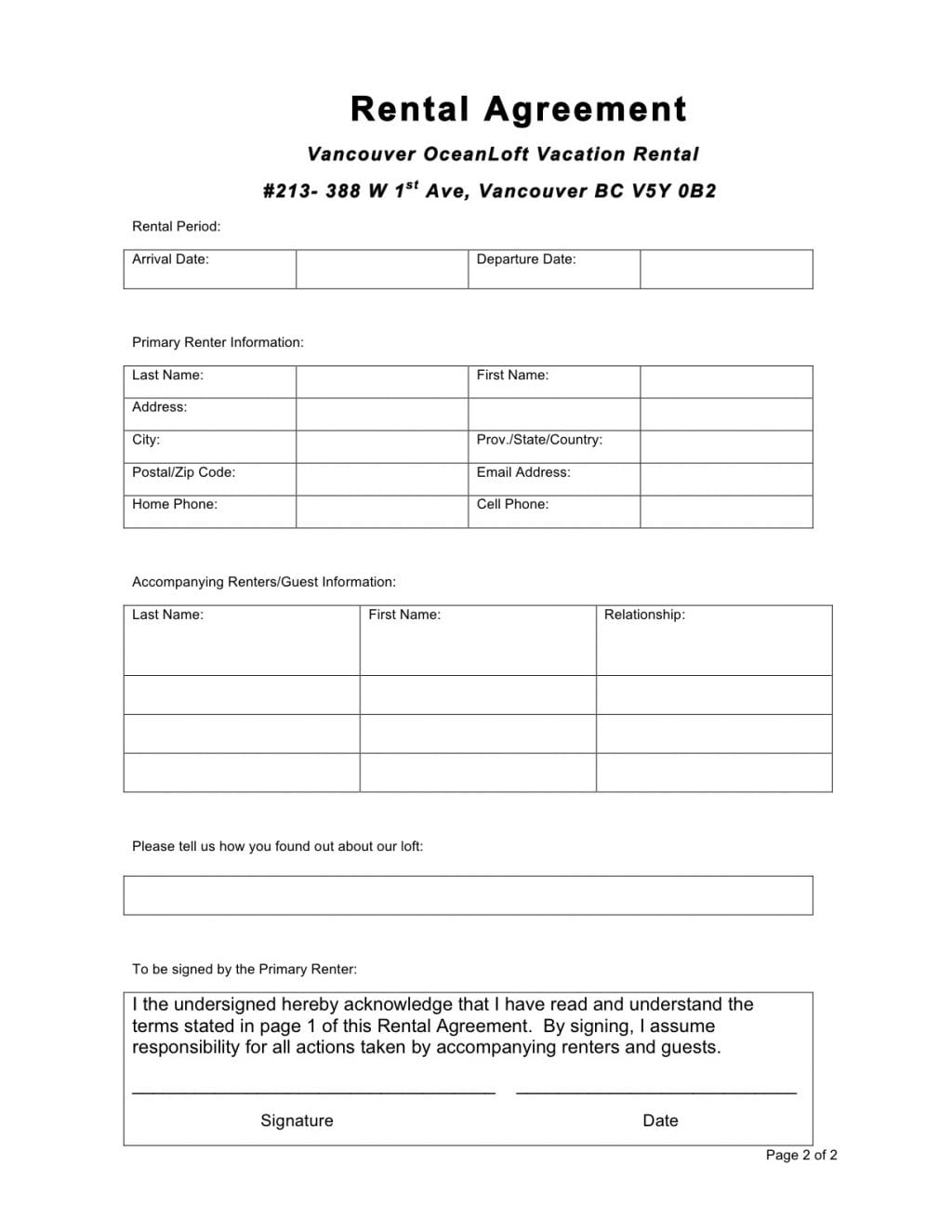
Home Rental Agreement Template

Boat Rental Agreement Template

Residential Apartment Rental Agreement

Rental Agreement FAQs
Can I use one rental agreement in every location?
No. Rental laws and required disclosures vary by country, state, province, and municipality. Use a locally appropriate form and obtain advice.
What is the difference between a lease and rental agreement?
The terms may describe fixed and periodic arrangements, but legal meaning depends on the actual clauses and local law, not only the document title.
Can a landlord enter whenever they want?
Usually not. Residential entry is commonly restricted by lawful purpose, notice, timing, and emergency rules.
Can a security deposit be any amount?
Not necessarily. Many jurisdictions regulate amount, storage, deductions, interest, and return deadlines.
Should every adult sign?
Often every adult tenant should sign, but occupancy and tenancy rules differ. Identify responsible parties clearly and seek local guidance.
Can the agreement prohibit all animals?
Ordinary pet rules may not apply to assistance animals or disability accommodations. Follow applicable housing and anti-discrimination law.
Can rent be increased during the term?
That depends on the agreement and governing law. Fixed terms, periodic tenancies, notice requirements, and rent controls may differ.
Does a boat rental need different terms?
Yes. It may require operating qualifications, safety rules, navigation limits, insurance, fuel, weather, damage, and emergency provisions.
Are external templates automatically valid?
No. They may be outdated, incomplete, or written for another jurisdiction. Review the source and obtain legal advice before use.
Are these rental agreement templates free?
The listed examples are reference resources, but external sites may impose their own terms, registration, or fees.
