
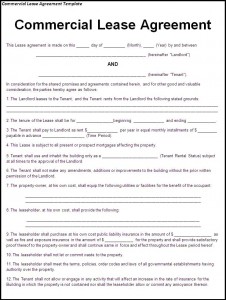
A commercial lease can shape years of operating costs, control how a space may be used, and determine what happens when repairs, delays, or business changes occur. It deserves more attention than filling in names, a monthly rent figure, and a signature date.
This collection includes six commercial lease agreement templates and examples for offices, shops, warehouses, and other business premises. Use them to understand common sections, prepare questions, and organize negotiated terms. Several downloads lead to third-party sources, while the final editable template is hosted here. Availability and licensing at external sites can change.
Important: Commercial leasing rules differ by jurisdiction, and business tenants may have fewer statutory protections than residential tenants. A generic form cannot account for a particular property, deal, industry, or local law. Have qualified local legal, tax, insurance, accessibility, and technical professionals review the final agreement before anyone signs.
Start with the Business Deal, Not the Boilerplate
Before editing a lease template, write a one-page deal summary. Identify the premises, permitted use, lease term, renewal options, base rent, deposit, operating expenses, improvement responsibilities, insurance, guarantees, parking, signage, and the conditions that must be satisfied before opening. This creates a shared reference for the detailed drafting.
Unclear commercial terms rarely become clearer when buried in legal language. If the parties disagree about who replaces an air-conditioning unit or pays property tax, resolve the issue during negotiation and record the answer directly.
Identify the Parties Correctly
Use each party’s exact legal name, entity type, registration jurisdiction, and notice address. A trading name may not be the legal tenant. Confirm who owns the property and who has authority to sign for a company, partnership, trust, or other entity.
If a guarantor is required, state the guarantee separately and explain its scope. A personal guarantee can expose an individual’s assets to business obligations, so independent advice is especially important. Do not assume signing “for the company” removes personal liability if the document includes a guarantee.
Describe the Premises Precisely
The address alone may be insufficient in a multi-unit building or site. Attach a plan and identify the unit, floor, approximate area, storage, loading areas, parking spaces, shared facilities, access routes, and any areas excluded from the lease. Note whether floor area was measured under a recognized standard and how later remeasurement affects rent or service charges.
Record what is included: fixtures, HVAC equipment, furniture, shelving, trade equipment, utilities, keys, access cards, and signage locations. Photographs and a condition report can reduce later arguments over damage and reinstatement.
Permitted Use and Regulatory Approvals
The permitted-use clause should be broad enough for realistic operations but specific enough for the landlord’s building plan. Consider products and services, office functions, storage, deliveries, food preparation, customer visits, outdoor activity, hours, noise, odors, hazardous materials, and future business lines.
A lease does not guarantee zoning approval, business licensing, fire clearance, health permits, accessibility compliance, liquor licensing, signage approval, or environmental permission. State who investigates approvals, who pays, and whether the tenant may terminate if essential permission cannot be obtained by a deadline.
Term, Commencement, and Possession
Distinguish the signing date, possession date, rent commencement date, and opening date. They may not be the same. If construction or approvals delay occupation, the agreement should address rent, outside completion dates, remedies, and who bears the resulting cost.
Define the fixed term and any renewal option. Renewal language should cover notice deadlines, the method for setting new rent, required tenant compliance, and what happens if the parties cannot agree. Calendar every option and notice date as soon as the lease is signed; missing one can be expensive.
Rent Is More Than the Headline Number
Write the base rent, currency, payment frequency, due date, payment method, escalation schedule, grace period if any, and consequences of late payment. If rent changes by a fixed percentage, index, market review, or stepped schedule, include a clear formula and worked example.
Clarify whether quoted rent includes or excludes sales tax, VAT, GST, or similar charges. Tax treatment depends on local rules and the parties’ circumstances, so obtain current professional advice rather than copying assumptions from an old form.
Operating Expenses and Additional Rent
Many commercial leases make the tenant responsible for costs beyond base rent. These may include property taxes, insurance, utilities, maintenance, security, cleaning, management fees, landscaping, common-area expenses, and capital work. Define each category instead of relying on a broad label such as “all expenses.”
Useful protections may include an annual budget, statements, supporting records, audit rights, allocation method, exclusions, caps on controllable costs, treatment of vacant units, and deadlines for reconciliations. Determine whether major capital replacements are excluded, amortized, or charged in another agreed way.
Gross, Net, and Triple-Net Structures
- Gross lease: the landlord generally absorbs specified property expenses within the rent, subject to the actual wording.
- Modified gross lease: expenses are divided under negotiated rules.
- Net lease: the tenant pays defined property expenses in addition to base rent.
- Triple-net lease: commonly shifts property tax, building insurance, and maintenance costs to the tenant, but the label never replaces the clauses.
Two agreements both called “triple net” can allocate costs differently. Read the definitions, exclusions, repair provisions, and reconciliation procedure line by line.
Deposit, Security, and Financial Support
Specify the security deposit or letter of credit, when it may be drawn, whether it earns interest, replenishment obligations, permitted deductions, and the return timetable. The lease should also address financial reporting, advance rent, guarantees, or other security requested by the landlord.
Consider what happens if the property is sold. The agreement and local law may determine whether the deposit transfers to a new owner and which party remains responsible.
Repairs, Maintenance, and Replacement
Divide responsibility for structure, roof, exterior, plumbing, electrical systems, HVAC, glass, doors, fixtures, fire systems, elevators, common areas, and tenant equipment. State who performs preventive maintenance, selects contractors, approves work, and pays for replacement at the end of useful life.
“Tenant keeps the premises in good repair” may be much broader than expected. Inspect critical systems before signing. For older buildings, obtain specialist assessments where the condition of the roof, HVAC, electrical capacity, drainage, or environmental systems could create a major cost.
Tenant Improvements and Fit-Out
Attach approved plans or define an approval process. Cover landlord contributions, payment milestones, ownership of improvements, contractor requirements, permits, liens, insurance, delays, change orders, and restoration when the lease ends.
If the tenant receives a fit-out allowance, specify eligible costs and the evidence required for reimbursement. State whether unused funds reduce rent, expire, or remain with the landlord.
Utilities, Technology, Signage, and Access
Confirm available power, water, gas, ventilation, internet pathways, metering, waste services, loading access, and after-hours building systems. A space can look suitable while lacking enough electrical capacity or ventilation for the proposed operation.
Address exterior and interior signs, directories, window graphics, lighting, permits, design standards, removal, and repair. Define access hours, security procedures, keys, cards, parking, deliveries, and emergency access.
Insurance, Indemnity, and Risk
The lease may require property, liability, business interruption, workers’ compensation, automobile, cyber, or other coverage. Identify limits, deductibles, additional insured requirements, certificates, waivers, and notice obligations. An insurance broker should confirm that the requested cover is available and consistent with the indemnity clauses.
Indemnities and liability limitations can transfer substantial risk. They should fit the parties’ control over the property and operations, applicable law, and insurance—not be copied blindly from another transaction.
Damage, Destruction, and Interruption
Explain what happens after fire, flood, storm, utility failure, or another casualty. Relevant questions include who repairs, whether rent is reduced, the restoration deadline, access to insurance proceeds, and each party’s termination rights.
Business interruption is not always caused by physical damage inside the premises. Consider blocked access, government orders, neighboring damage, and loss of essential services where appropriate.
Assignment, Sublease, and Business Change
A growing company may need to sublet, relocate, restructure, sell its business, or bring in an investor. Define when landlord consent is required, the standard for granting it, information to be supplied, fees, continuing liability, and treatment of affiliate transfers or changes of control.
Do not assume an assignment releases the original tenant or guarantor. The lease should say whether liability continues and whether a written release is required.
Default and Remedies
Separate monetary defaults from non-monetary breaches. State notice, cure periods, interest, costs, termination rights, re-entry, acceleration, mitigation, and other remedies permitted by law. Some breaches—such as unsafe use or lack of insurance—may require faster action.
Balanced drafting distinguishes a correctable mistake from a serious or repeated failure. Local law may restrict enforcement even when the contract states a remedy.
End-of-Lease Planning
Address notice, surrender condition, cleaning, repairs, removal of goods, restoration of alterations, signage, keys, holdover rent, and abandoned property. A move-out standard should be practical and tied to the documented starting condition.
Renewal or relocation decisions often begin long before expiry. Set internal reminders well ahead of formal notice deadlines so the business has time to compare options.
Due-Diligence Checklist Before Signing
- Verify ownership, parties, and signing authority.
- Inspect and measure the premises.
- Confirm zoning, licensing, accessibility, and intended use.
- Model total occupancy cost, not base rent alone.
- Review operating-expense history and projections.
- Assess structural and building-system condition.
- Confirm utilities, internet, loading, parking, and access.
- Price required insurance and fit-out work.
- Review environmental and safety issues relevant to the site.
- Negotiate renewal, assignment, default, and exit provisions.
- Attach every referenced plan, schedule, and condition report.
- Obtain independent legal and tax advice.
How to Customize a Commercial Lease Template
Keep an untouched master, work in a copy, and use version names that show the date and draft stage. Replace every placeholder; unresolved brackets and inconsistent defined terms are warning signs. Number clauses and schedules so amendments can refer to them precisely.
After negotiation, compare the clean signing copy with the final marked draft. Confirm every attachment is present and every signature block matches the correct entity. Each party should retain a complete, searchable copy along with notices, insurance evidence, inspection reports, and later amendments.
Preview and Download the Commercial Lease Templates
The examples below preserve the original preview images and available source links. External files may change or disappear; check the destination, file type, security, and usage rights before downloading.
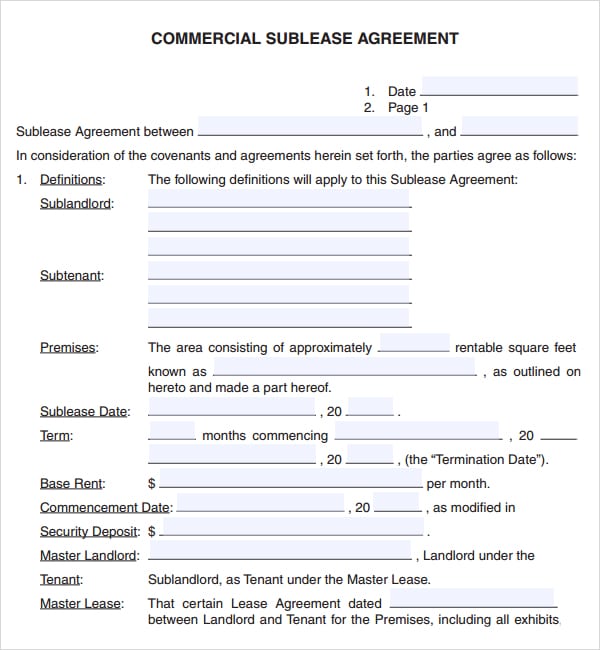
Commercial Sublease Agreement Template

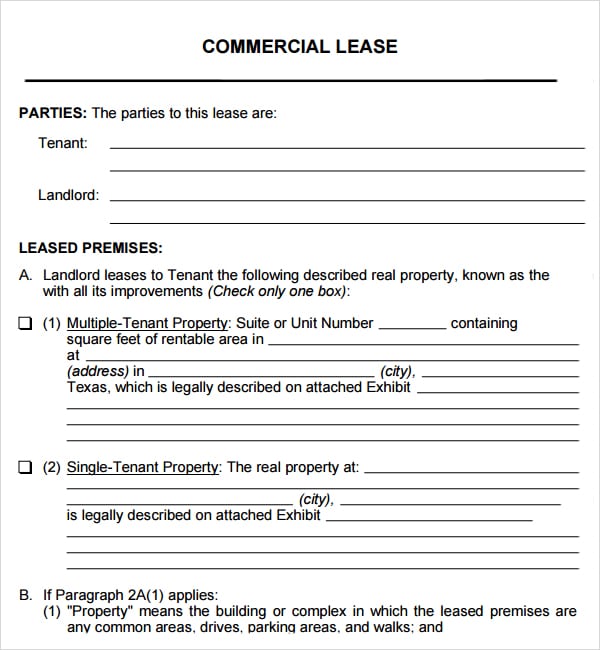
Sample Commercial Lease Agreement
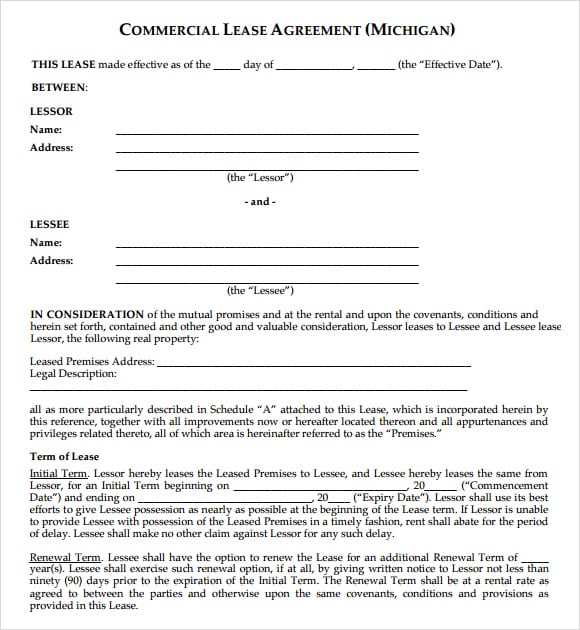
Commercial Lease Agreement Example
Printable Commercial Lease Agreement
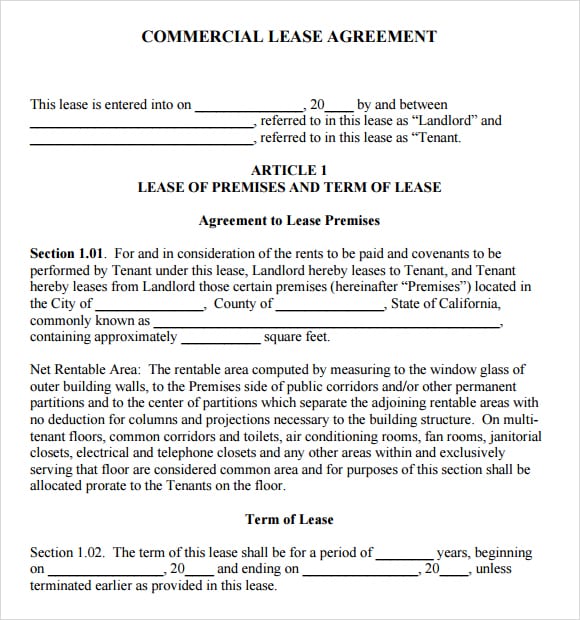
Triple-Net Commercial Lease Sample
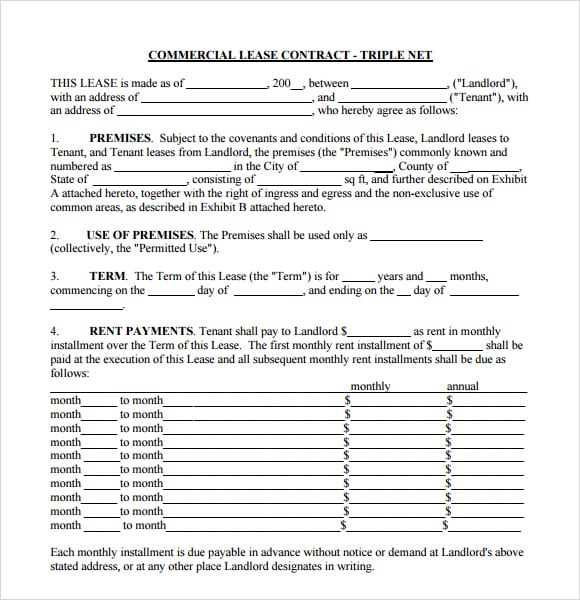
Editable Commercial Lease Agreement Template


Commercial Lease Agreement FAQs
Is a commercial lease the same as a residential lease?
No. Commercial premises, bargaining practices, costs, and legal protections can be very different. Use a form designed for business property and obtain local advice.
What is additional rent?
It is a contractual label often used for amounts payable beyond base rent, such as taxes, insurance, utilities, maintenance, or service charges. The lease must define it precisely.
What does triple net mean?
It commonly means the tenant pays property tax, building insurance, and maintenance in addition to base rent. The actual clauses control, not the label.
Should the premises plan be attached?
Usually it is helpful, especially for multi-unit sites. It can identify the leased unit, shared areas, parking, storage, loading space, and access routes.
Can a tenant sublease the property?
Only as the lease and applicable law allow. Many leases require prior landlord consent and keep the original tenant liable unless expressly released.
Who pays for HVAC replacement?
That depends on the negotiated repair and capital-replacement clauses. The agreement should distinguish routine servicing, repairs, and full replacement.
Can the tenant end the lease if permits are refused?
Only if a condition or termination right addresses that situation, or applicable law provides another remedy. Permit contingencies should be negotiated before signing.
Does a template replace a lawyer?
No. A template is a drafting and review aid. A qualified local lawyer should assess the transaction, property, risks, and current law.
What records should be kept with the lease?
Keep the signed agreement, schedules, amendments, plans, condition reports, notices, rent records, insurance certificates, approvals, and correspondence.
Are the external downloads guaranteed to remain available?
No. Third-party sources control their own files and terms. Check each destination before relying on a download.