
A strong cover letter does not retell your r�sum� in paragraphs. It gives the employer a focused reason to keep reading: you understand the role, you can point to relevant evidence, and you can explain why the match makes sense.
The seven cover letter templates on this page include an editable Word download plus PDF, Word, r�sum�, job, CV, and writing examples from external sources. Use a layout to save time, but write the letter for one real vacancy. Recruiters can recognize a generic message quickly.
What a Cover Letter Should Accomplish
By the end of one page, the reader should know which job you want, why your background is relevant, what proof supports your claims, and what you would like to happen next. The letter also demonstrates judgment: what you choose to emphasize, how clearly you communicate, and whether you followed the application instructions.
Not every employer requests a cover letter. When it is optional, a thoughtful letter can help explain motivation, a career change, a return to work, an unusual background, or a particularly strong connection to the organization. When instructions say not to send one, follow the instructions.
Research Before Writing
Read the vacancy more than once. Highlight the responsibilities, required skills, preferred experience, tools, outcomes, and language the employer uses. Then study the organization’s website, recent public work, products, customers, and values. Use reliable sources and avoid repeating marketing phrases you do not understand.
Choose two or three requirements where you have credible evidence. A cover letter is stronger when it goes deep on a few relevant examples instead of listing every skill you possess.
A Practical One-Page Structure
Header and greeting
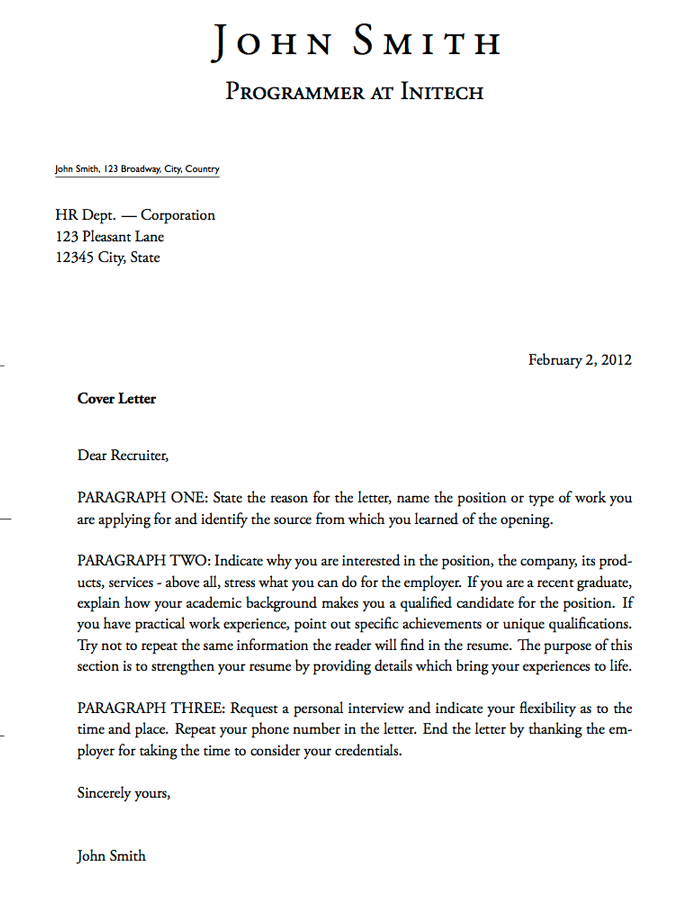
Include your name, phone, professional email, location if useful, date, and the employer’s details where the local format calls for them. Address a named person when the posting or organization provides one. Do not guess someone’s title or gender. “Dear Hiring Manager” is acceptable when no reliable name is available.
Opening paragraph
Name the role and lead with a relevant connection or result. Avoid empty openings such as “I am writing to apply” unless you immediately add substance. A useful opening might connect your current work to the employer’s immediate need.
Evidence paragraphs
Use one or two short paragraphs to show how you handled comparable work. Explain the situation, your action, and the result. Numbers can help when they are accurate and meaningful, but context matters more than decoration.
Closing paragraph
Restate the fit without repeating the introduction, thank the reader, and invite the next step. Keep the tone confident and courteous. Do not demand an interview or promise to call repeatedly.
Turn Claims into Evidence
“I have excellent communication skills” is difficult to evaluate. Evidence sounds different:
I rewrote the customer onboarding guide and introduced a weekly question review with the support team. In the following quarter, repeated setup tickets fell by 18 percent.
The example names the task, action, collaboration, and measured outcome. If you cannot share confidential figures, describe scale or impact honestly: “supported three regional teams,” “shortened the approval cycle,” or “received positive feedback from first-time users.” Never invent numbers.
Match the Vacancy Without Copying It
Use the employer’s terminology naturally when it accurately describes your experience. This helps both human readers and applicant-tracking systems understand relevance. Do not paste a block of keywords or claim tools you have never used.
If the posting asks for project coordination, stakeholder communication, and budget tracking, select an example that combines those skills. Explain what you coordinated, who was involved, what you tracked, and what changed because of your work.
Write a Better Opening
The first lines should create direction, not drama. Compare these approaches:
Generic: I am a hardworking professional seeking an exciting opportunity with your prestigious company.
Focused: Your operations coordinator role calls for someone who can organize vendor schedules and improve reporting. In my current position, I coordinate 25 recurring suppliers and built a weekly exception report that reduced missed deliveries.
The focused version connects a real requirement to evidence. Adapt it to your facts; do not reuse the wording as a claim.
Choose the Right Tone
Professional does not mean stiff. Use direct sentences, specific nouns, and active verbs. A creative studio may welcome a warmer voice; a legal, medical, government, or financial employer may expect greater formality. The letter should still sound like one person speaking clearly.
Avoid exaggerated praise, jokes that need context, and claims that you are the “perfect candidate.” Show fit through evidence and let the employer decide.
Handling a Career Change
Do not apologize for changing direction. Briefly explain the move, identify transferable skills, and show the steps you have taken to become ready. Relevant coursework, volunteer projects, certifications, freelance work, or a portfolio can provide evidence where your job titles do not.
Connect the old field to the new one precisely. A teacher moving into customer education might emphasize curriculum design, facilitation, feedback analysis, and clear explanations-not simply say that teaching creates “many transferable skills.”
Explaining an Employment Gap
You usually do not need to explain every gap in a cover letter. If context would reassure the employer, keep it brief, factual, and forward-looking. For example, note that you took planned time for caregiving and are now available for full-time work, then move quickly to current preparation and relevant experience.
Health, family, age, disability, and other personal information can be sensitive. Share only what you are comfortable disclosing and what is useful to the application. Local employment law and hiring practices vary.
When You Lack One Requirement
Do not draw attention to every missing preference. If a central requirement is absent, address it honestly and show adjacent experience plus a realistic learning plan. Never imply that a short tutorial equals years of professional practice.
For example: “Although I have not used Platform X in production, I manage the same workflow in Platform Y, completed the vendor’s fundamentals course, and built a sample reporting project.” That gives the employer evidence and a clear boundary.
Formatting That Helps the Reader
Use a readable font, sensible margins, short paragraphs, and enough white space. Match the r�sum�’s name and contact styling when practical, but do not let design overshadow the message. One page is a useful target for most applications unless the employer requests something different.
Save the final file as PDF unless the application requires Word or plain text. Use a clear filename such as Jordan-Lee-Cover-Letter-Operations-Coordinator.pdf. Open the exported file and verify page breaks, links, symbols, and selectable text.
Applicant-Tracking System Basics
Complex columns, decorative icons, text boxes, and image-only text can create problems in some systems. Keep essential content in ordinary text and use familiar headings. Paste the letter into a plain-text window as a quick check; the reading order should remain logical.
Applicant tracking is not a reason to stuff keywords. Accurate alignment, clear job titles, recognizable skill terms, and simple formatting are more useful than repetition.
Cover Letters for Email Applications
Follow the vacancy’s instructions first. If the letter must be attached, keep the email short: identify the role, name the attachments, and provide your contact details. If the employer asks for the cover letter in the email body, remove postal-address blocks that make the message cumbersome and retain the greeting, focused content, and sign-off.
Use a clear subject line such as Application: Operations Coordinator – Jordan Lee. Check that the recipient is correct and the promised files are attached before sending. Avoid “high importance” flags unless the employer requested them.
Internal Applications and Promotions
Do not assume an internal hiring manager knows your contribution. Explain your results and readiness with the same care you would use externally, while showing your understanding of the organization. Acknowledge the move positively rather than criticizing your current team or manager.
Internal candidates can discuss cross-team relationships, institutional knowledge, and a realistic plan for the new role. Respect confidential information and do not present shared achievements as though you delivered them alone.
Recent Graduates and Early-Career Applicants
When formal experience is limited, draw evidence from coursework, placements, part-time jobs, student organizations, volunteering, competitions, and independent projects. Focus on what you produced, improved, learned, or coordinated.
Instead of saying “My degree taught me teamwork,” describe the capstone project, your responsibility, the obstacle the team faced, and the result. Employers are evaluating potential, judgment, reliability, and communication as well as years of experience.
Senior and Executive Cover Letters
Senior applicants should resist turning the letter into a career biography. Select achievements tied to the organization’s priorities: transformation, revenue, risk, operations, culture, product, governance, or another relevant outcome. Show scale and explain your role without overstating team results.
Leadership claims need evidence too. Describe a decision, system, or capability you built and how people or performance changed. Keep confidential strategies, client information, and nonpublic financial details out of the application.
Proofreading in Three Passes
- Content pass: Does every paragraph support this role? Are the claims accurate?
- Language pass: Remove repetition, filler, clich�s, and vague adjectives.
- Presentation pass: Check names, title, company, spacing, filename, links, and PDF output.
Read the letter aloud. Awkward sentences become easier to hear. Then ask a trusted person to read it without your explanation. If they cannot identify your strongest qualification, revise the emphasis.
Frequent Cover Letter Mistakes
- Sending the same letter to every employer
- Addressing the wrong organization or role
- Repeating the r�sum� without adding context
- Using praise instead of evidence
- Writing long paragraphs with several ideas
- Claiming tools or results inaccurately
- Focusing only on what the applicant wants
- Including unnecessary personal or sensitive information
- Ignoring the requested file format or questions
- Failing to check the final attachment
A Final Customization Checklist
Before submitting, confirm that the opening names the correct role; the middle demonstrates two or three relevant strengths; each example includes your action and outcome; the employer connection is genuine; and the closing is concise. Remove sentences that could be sent unchanged to any company.
Keep an editable master, but save a separate version for each application. Record the vacancy, submission date, file, contact, and follow-up status. If the posting later disappears, you will still have the description that guided your application.
Preview and Download the Cover Letter Templates
The original previews and destinations are preserved below. External files may change, so verify each source, format, security, and license.
Editable Cover Letter Template


PDF Cover Letter Template
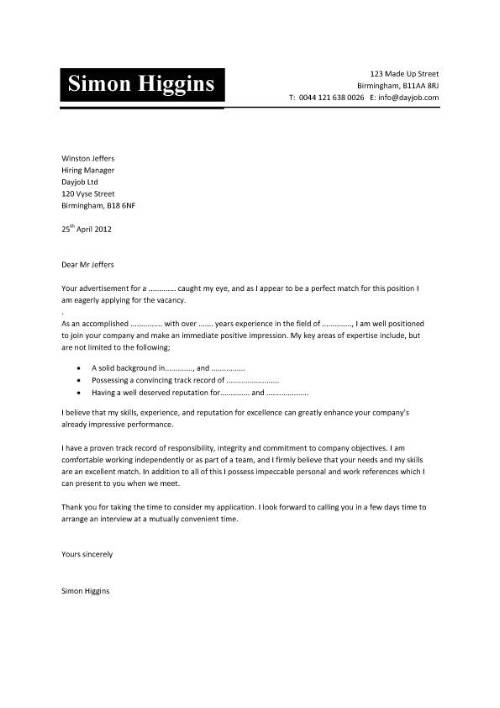

Microsoft Word Cover Letter Template
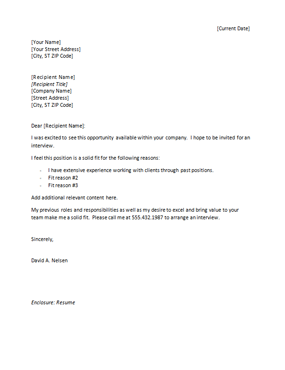
R�sum� Cover Letter Example
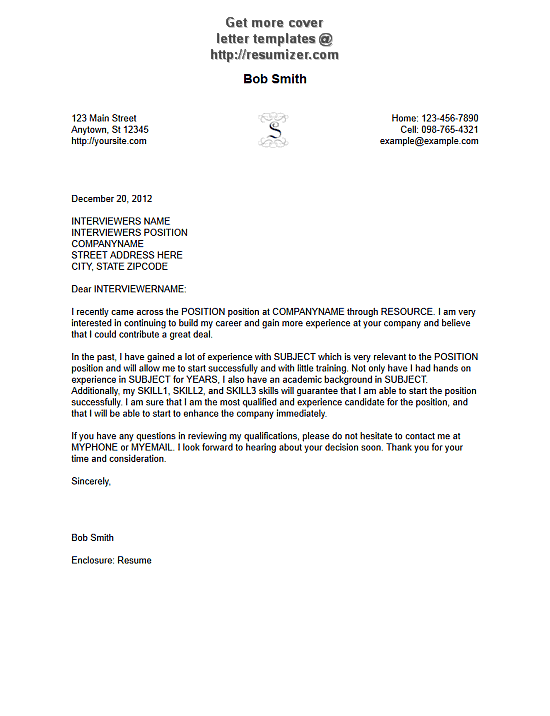
Job Application Cover Letter
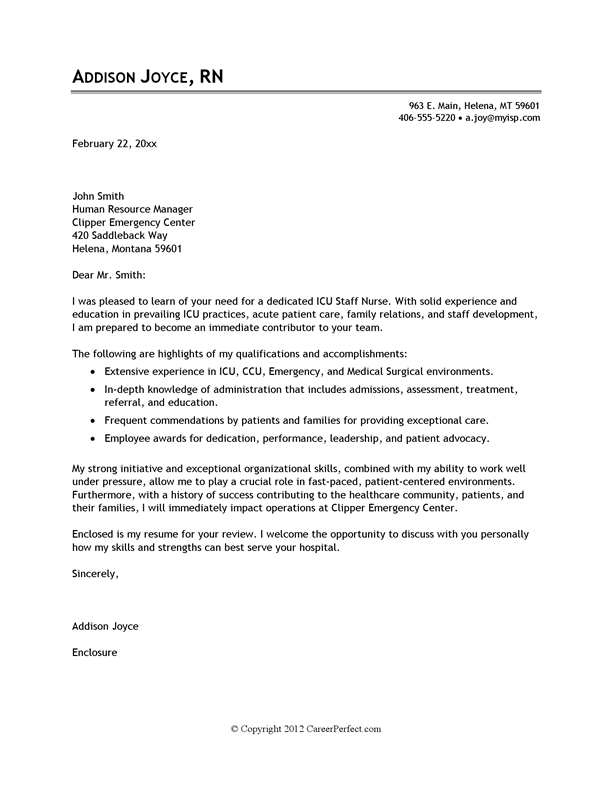
CV Cover Letter Template
Cover Letter Writing Guide
Cover Letter Template FAQs
How long should a cover letter be?
For most applications, one focused page is a useful target unless the employer requests another format.
Should I use the same cover letter for every job?
No. Customize the role, employer connection, examples, keywords, and emphasis for each vacancy.
Can a cover letter repeat my r�sum�?
It should complement the r�sum� by explaining relevance and adding context, evidence, and motivation.
What if I cannot find the hiring manager’s name?
Do not guess. “Dear Hiring Manager” is a clear professional option.
Should I explain an employment gap?
Only when useful. Keep it brief, factual, and forward-looking, and protect sensitive personal information.
Is PDF or Word better?
Follow the instructions. Otherwise, PDF usually preserves appearance; use Word when specifically requested.
Can I use AI to write a cover letter?
Use tools cautiously for brainstorming or editing, but verify every claim and rewrite the result in your own accurate voice.
Are the external downloads guaranteed?
No. Third-party availability, security, and licensing can change.