
A strong business proposal does not begin with your company history. It begins with the reader’s decision.
The client, manager, donor, or partner opening your document is usually asking: Do they understand what we need? Is the approach credible? What will it cost? What happens next? This free proposal template for Microsoft Word helps you answer those questions in a clear, professional order. It can be adapted for consulting, freelance services, marketing, design, construction, training, nonprofit projects, internal initiatives, product supply, and many other situations.
The template provides a polished starting structure. Your advantage comes from the thinking you put inside it.
Before Writing, Find the Real Decision
A request for a proposal may look complete while leaving the most important issue unstated. A client who asks for a new website may actually need more qualified inquiries. A department asking for training may be trying to reduce errors. A community organization requesting event support may care most about attendance and accessibility.
Gather context before drafting:
- What prompted the request now?
- What result matters most?
- Who will review and approve the proposal?
- What criteria will they use?
- What constraints are fixed?
- What is the desired start or completion date?
- What would make the project unsuccessful?
If you cannot speak with the reader, study the brief, request for proposal, prior correspondence, public information, and any supplied data. Mark assumptions openly rather than presenting guesses as facts.
A Useful Proposal Structure
Proposal formats vary, but most readers need the following elements.
1. Cover Page
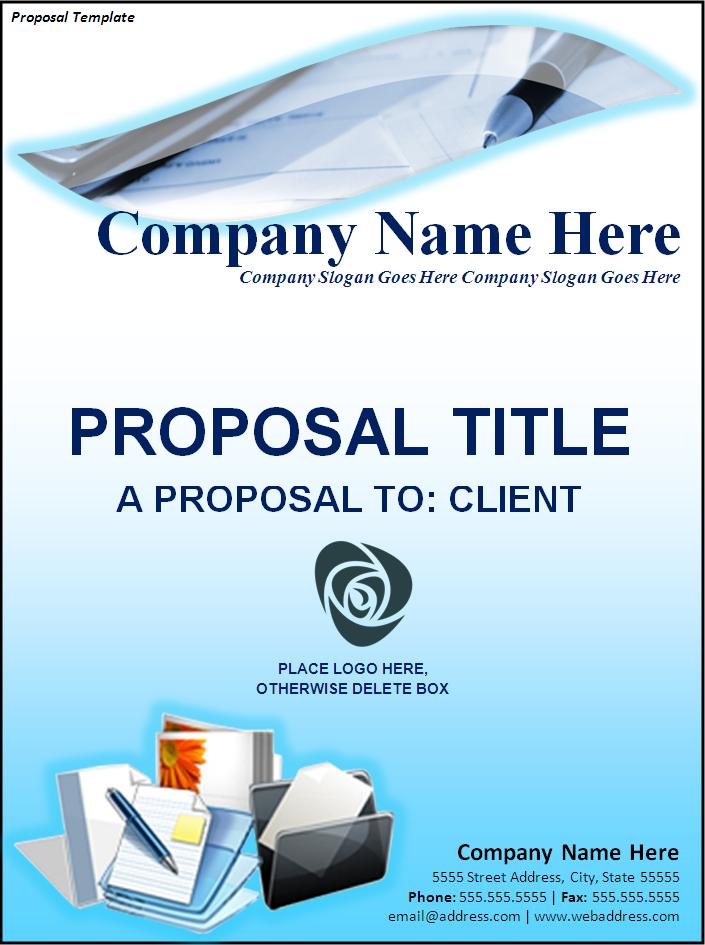
Include the proposal title, client or recipient, your organization, date, version, and contact person. Keep it calm and legible. A proposal cover should identify the document, not compete with it.
2. Executive Summary
Write a short overview of the need, proposed solution, expected outcome, approximate investment, and next step. Although it appears first, it is often easier to write last.
3. Understanding of the Need
Describe the current situation in the reader’s language. Show that you understand the problem, opportunity, audience, constraints, and stakes. Avoid dramatizing the problem merely to make your solution look necessary.
4. Proposed Approach
Explain what you will do and why. Organize the work into phases, workstreams, or clear activities. The method should be detailed enough to evaluate without burying the reader in internal procedure.
5. Scope and Deliverables
State exactly what will be provided: reports, designs, sessions, files, installations, meetings, research, revisions, support, or other outputs. Name important exclusions too.
6. Timeline and Milestones
Show the sequence of work, dependencies, review points, and expected completion. If dates depend on approval or access, say so.
7. Team and Qualifications
Introduce the people doing the work and connect their relevant experience to this assignment. A short, specific explanation is more persuasive than several pages of generic credentials.
8. Pricing and Commercial Terms
Present fees, payment schedule, taxes, reimbursable expenses, assumptions, and validity period. Make it possible for the reader to understand the total financial commitment.
9. Acceptance and Next Steps
Tell the reader how to proceed: approve the proposal, sign an agreement, schedule a review, issue a purchase order, or request a revised scope.
Write the Executive Summary for a Busy Reader
The executive summary may be the only section a senior decision-maker reads carefully. It should stand on its own.
A practical pattern is:
You want to achieve [outcome] while addressing [important constraint]. We propose [approach], delivered through [key phases]. The work is expected to produce [deliverables or measurable result] over [timeframe] for an investment of [price or pricing basis].
Do not fill this section with slogans such as “world-class solutions” or “unmatched excellence.” Replace claims with relevant proof, a clear method, and concrete outcomes.
Make the Problem Statement Accurate
A proposal earns trust when the reader recognizes their situation. Use facts you can support: documented delays, conversion data, customer feedback, compliance needs, capacity limits, or an agreed strategic goal.
Distinguish evidence from inference. For example:
Evidence: The support team received 640 password-reset requests last quarter.
Inference: Clearer self-service guidance may reduce repetitive requests.
The second statement may be reasonable, but it should not be written as a guaranteed fact without further evidence.
Describe Benefits Without Overpromising
Features describe what you will provide. Benefits explain why it matters.
- Feature: Weekly project dashboard
- Benefit: Stakeholders can see decisions, risks, budget status, and upcoming milestones in one place.
- Feature: Three staff workshops
- Benefit: Employees can practice the new workflow before launch and raise questions in a guided setting.
Use careful language around outcomes you do not fully control. “Designed to improve,” “intended to reduce,” and “will provide the capability to” may be more accurate than promising a precise revenue increase or guaranteed ranking.
Scope Is Where Good Proposals Become Good Projects
Ambiguous scope causes mismatched expectations. For every deliverable, clarify quantity, format, level of completion, review process, and responsibility.
Compare these descriptions:
Vague: Create social media content.
Clearer: Develop twelve static posts for LinkedIn and Instagram, including final copy and platform-sized graphics, with one consolidated revision round based on feedback submitted within three business days.
Depending on the project, define:
- Number of concepts or options
- Number and meaning of revision rounds
- File types and handoff materials
- Meeting frequency and length
- Testing or quality-review responsibilities
- Content, data, access, or approvals supplied by the client
- Training, documentation, warranty, or support period
- Work explicitly outside the proposal
Exclusions are not unfriendly. They help both parties identify additional needs before work begins.
Build a Timeline Around Dependencies
A timeline should explain more than duration. Show what must happen before the next phase starts.
- Discovery: kickoff, interviews, document review
- Planning: requirements, priorities, solution outline
- Production: writing, design, development, or delivery
- Review: client feedback and revisions
- Launch or handoff: final files, training, publication, installation
- Closeout: acceptance, final invoice, lessons, support transition
If the schedule assumes feedback within two days, access to systems on day one, or a single authorized approver, state those assumptions. A date is only credible when its dependencies are visible.
Present Pricing So It Can Be Compared
Choose a model suited to the work: fixed fee, hourly or daily rate, retainer, milestone payments, unit pricing, or a combination. Explain what the price includes.
A pricing table might contain:
- Phase or deliverable
- Fee
- Payment milestone
- Optional item
- Applicable tax
- Reimbursable expense rule
- Total or estimated range
If you offer tiers, make the difference meaningful. “Essential,” “Expanded,” and “Ongoing” could vary by deliverables, research depth, turnaround, support, or reporting—not by arbitrarily removing something required for success.
Do not hide mandatory charges in footnotes. If the final cost cannot be fixed yet, give a transparent calculation method, assumptions, approval process, and spending limit where appropriate.
Use Proof That Matches the Assignment
A long client list is less compelling than one relevant example. Select a brief case study with context, your contribution, and a supported outcome. If the work is confidential, anonymize it honestly.
Testimonials should be authentic and used with permission. Do not invent client quotes, statistics, certifications, partnerships, staff availability, or project results. For regulated or safety-critical work, identify required licenses, standards, insurance, or specialist review accurately.
Risks Can Increase Confidence
Ignoring risk does not make a proposal reassuring. A concise risk section can show maturity.
- Risk: Delayed stakeholder feedback
- Impact: Later production and launch dates
- Mitigation: Confirm one approver, schedule review sessions in advance, and use a consolidated feedback form
Cover only material risks and avoid presenting routine project management as a crisis. Note which risks belong to you, the client, a third party, or both.
Terms That Need More Than a Template
A proposal may discuss commercial intentions, but it is not automatically a complete contract. Depending on the work, a separate agreement may need to address intellectual property, confidentiality, data protection, warranties, liability, indemnity, insurance, termination, dispute resolution, governing law, subcontracting, and change control.
Do not copy legal clauses without understanding them. Have a qualified professional review terms appropriate to the transaction and jurisdiction. This template is a writing and planning aid, not legal advice.
Make the Proposal Easy to Review
Good formatting reduces decision effort. Use descriptive headings, short paragraphs, consistent terms, readable tables, page numbers, and enough white space. Label optional items clearly. Put important conditions near the relevant price or scope rather than hiding them several pages later.
Before sending, export a PDF and inspect every page. Check for:
- Client names copied from another proposal
- Old dates, prices, and project references
- Broken tables and headings stranded at page bottoms
- Comments, tracked changes, and internal notes
- Unclear version numbers
- Links that do not work
- Calculation and tax errors
- Claims that cannot be supported
A Short Proposal Can Still Be Complete
Length should follow complexity. A small freelance assignment may need two or three pages. A competitive, technical, public-sector, or multi-party project may need much more. Do not expand a simple proposal with repeated marketing language, and do not compress a high-risk project until responsibilities disappear.
If the recipient supplied response instructions, follow them exactly. A brilliant document can still be rejected for missing a required form, page limit, deadline, signature, file format, or submission channel.
What Happens After You Send It?
Include a reasonable follow-up point in the message that accompanies the proposal. Be prepared to explain assumptions, revise scope, and document changes. When negotiation alters deliverables, dates, or fees, update the proposal or agreement rather than relying on scattered email messages.
Keep a final sent copy, the accepted version, and the signed contract together. Once work starts, convert promises into a project plan with owners, deadlines, and acceptance criteria.
Download Your Free Proposal Template
Preview the editable layout below and download the Microsoft Word file. Replace every sample field, tailor the structure to the reader’s evaluation process, and review commercial or legal terms before relying on the document.

Proposal Template FAQs
What is the purpose of a business proposal?
It explains a need, recommended solution, scope, value, timeline, qualifications, price, and next step so a recipient can make an informed decision.
How long should a proposal be?
Long enough to support the decision and no longer. Simple work may need a few pages; complex or regulated projects may require extensive technical, commercial, and compliance detail.
Should I write the executive summary first?
You can outline it first, but many writers finish it after the scope, method, schedule, and pricing are settled. That makes the summary more accurate.
What is the difference between a proposal and a quote?
A quote primarily states prices for defined goods or services. A proposal usually explains the problem, approach, deliverables, value, team, schedule, and commercial terms.
Is a proposal legally binding?
Possibly, depending on its wording, acceptance, surrounding communications, and local law. Do not assume it is nonbinding; obtain legal advice for important transactions.
Should a proposal include exclusions?
Yes. Relevant exclusions clarify boundaries and reveal additional needs before work begins. Write them plainly and place them near the scope.
How do I make a proposal persuasive?
Demonstrate an accurate understanding of the reader’s need, recommend a credible approach, show relevant proof, explain value, and remove uncertainty about scope, price, and next steps.
Can I reuse the same proposal for different clients?
Reuse a controlled structure, not generic reasoning. Each proposal should reflect the recipient’s situation, language, priorities, constraints, and evaluation criteria.
What file format should I send?
Follow the recipient’s instructions. PDF is often best for preserving layout, while the editable Word file should usually remain an internal working document unless requested.
Is this proposal template free?
Yes. Download and customize it for legitimate business, freelance, nonprofit, or internal project proposals.