
A gift voucher is a promise of future value. It can feel personal and generous, but only when the recipient understands what it covers, where it can be used, and whether any conditions apply. Attractive design helps; clear terms matter more.
This collection brings together six gift voucher templates for shops, salons, restaurants, gyms, service businesses, events, and personal gifts. Some previews link to third-party design sources, while the final editable ZIP is hosted here. Use the layouts as inspiration, then adapt the wording and controls to your business and local rules.
Start with the Offer
Decide whether the voucher represents a fixed monetary value, a particular product, a defined service, an experience, or a promotional reward. “One massage” needs a duration and service level. “Dinner for two” should explain whether drinks, taxes, or service charges are included. A $100 voucher should state its currency.
Do not promise something the business cannot reliably deliver. Check capacity, seasonal restrictions, supplier costs, and the likely time between sale and redemption. If the service may change, explain what equivalent value or alternative will be offered.
Essential Gift Voucher Details
- Business name, logo, and contact information
- Voucher title and unique code or serial number
- Monetary value or precise description of the benefit
- Recipient and purchaser names when personalization is desired
- Issue date and purchase reference
- Redemption location, website, or booking method
- Expiry date only where lawful and appropriate
- Important exclusions, booking rules, and transfer conditions
- Lost-voucher, refund, cash-change, and partial-use policy
- Authorized signature or validation method where needed
Keep the front pleasant and uncluttered. Put longer conditions on the back, in an attached document, or on a clearly referenced web page. Customers should be able to read the important limitations before purchase.
Numbering and Fraud Prevention
A unique code connects the designed voucher to the business record. Use a controlled sequence or securely generated code rather than a predictable handwritten number. Record the issue date, amount, purchaser, payment status, activation status, balance, redemption history, and cancellation status.
For higher-value vouchers, consider a barcode, QR code, tamper-evident feature, or verification through the point-of-sale system. A QR code should lead to a secure redemption or information page; it should not expose a customer’s private information. Train staff to check the system record instead of accepting appearance alone.
Expiry Dates and Consumer Rules
Gift-card and voucher expiry laws differ widely. Some places prohibit expiration for certain paid vouchers, require a minimum validity period, regulate fees, or treat promotional certificates differently from purchased value. Do not copy an expiry term from an online sample without checking current local consumer law.
If an expiry date is allowed, display it clearly and explain what expires: the entire value, a promotional bonus, or access to a specific service. Avoid hiding a material limitation in tiny print.
Redemption Rules People Can Understand
Explain whether the voucher can be used online, in store, at one branch, or at participating locations. For appointments, state how to book, how far ahead to reserve, and what cancellation or no-show policy applies. If peak dates are excluded, name them or provide an accessible current list.
Address partial redemption. Does the remaining balance stay on the original voucher, move to a new voucher, or remain in an electronic account? State whether cash change is available and follow local law. The staff process should match the written policy.
Personal Gift vs Business Promotion
A personal voucher can include the giver’s name, recipient’s name, occasion, and a short message. A commercial voucher needs stronger operational details: issuer identity, serial number, value, terms, validation, and accounting controls. A promotional coupon that requires a purchase should not be presented as though it were the same as a fully paid gift card.
For employee rewards, customer recovery, charity events, or influencer campaigns, document who funded the voucher and how it will be treated internally. Tax consequences can differ, so obtain professional advice when vouchers are issued as compensation, prizes, donations, or marketing incentives.
Design for the Occasion Without Limiting Use
Birthday, wedding, holiday, thank-you, and wellness themes can make a voucher feel special. Yet an overly specific design may become unusable after the season. A flexible master with changeable colors, message, photograph, and title is easier to maintain.
Leave enough blank space for personalization. Avoid placing essential words over a busy image. Use strong contrast, readable type, and a logical order. A recipient should see the gift first, then the value, issuer, redemption method, and conditions.
Printing and Digital Delivery
Print a proof at actual size and test trimming, folds, envelopes, handwriting, barcodes, and QR codes. Dark backgrounds consume ink and may crack along folds. If using commercial printing, request bleed, color, and safe-area specifications.
For email delivery, export a stable PDF or image and verify it on a phone. Do not send an editable master to the recipient. Use an access-controlled system for live balances and redemption; the visual file should not be the only record of value.
Accounting and Reconciliation
Money received for an unredeemed voucher may be recorded differently from an ordinary completed sale. Tax timing, unclaimed balances, refunds, breakage, and reporting depend on local rules and accounting policy. Consult a qualified accountant.
Reconcile issued, activated, redeemed, expired, canceled, and outstanding vouchers regularly. Investigate duplicate codes, manual overrides, unusual redemptions, and mismatches between the sales system and accounting records.
Staff Instructions
Give staff a short procedure for selling, activating, checking, partially redeeming, replacing, canceling, and escalating vouchers. Include examples. Consistent handling prevents an awkward situation in which one branch accepts a voucher and another refuses the same terms.
Define who may issue complimentary vouchers, extend validity, replace a lost certificate, override a balance, or approve a refund. Keep an audit trail for exceptions.
Common Mistakes to Avoid
- No unique code or central record
- Unclear value or service description
- Hidden expiry or blackout dates
- No partial-redemption process
- A voucher sold before it is activated
- Unreadable conditions or weak color contrast
- Broken booking or redemption instructions
- Staff applying different rules
- Sending customers an editable file
- Ignoring consumer, tax, privacy, or accounting requirements
A Simple Voucher Workflow
When a customer buys a voucher, create or retrieve the unique record, confirm the value and terms, take payment, activate it, and issue the customer copy. Give the purchaser a receipt that is separate from the gift presentation so the recipient does not necessarily see the price. If delivery is scheduled, record the date and destination.
At redemption, locate the live record, confirm the remaining balance and permitted use, apply the correct amount, and record the transaction immediately. Return or reissue any remaining value according to policy. Mark a fully used voucher as redeemed without deleting its history.
Writing Voucher Terms in Plain Language
Short sentences are more useful than dense legal wording. Put the most important conditions first. For example:
Valid for a 60-minute standard massage at the Main Street location. Booking is required. Present this voucher code when booking and on arrival. Cancellations made less than 24 hours before the appointment may be treated as used, where permitted by law. This voucher is not exchangeable for cash except where required by law.
That wording identifies the benefit, location, booking step, cancellation consequence, and cash policy. It still needs local review, but it is easier for a customer and employee to follow than scattered fine print.
Replacing Lost or Stolen Vouchers
A replacement policy should balance customer care with fraud risk. If the purchaser provides an order number, receipt, payment evidence, recipient details, or the original code, staff may be able to cancel the unused record and issue a replacement. Never keep both codes active.
Explain that anonymous cash-purchased certificates may be difficult to replace without evidence. Do not request more personal information than needed, and store any verification data securely.
Refunds, Returns, and Service Changes
State whether the purchaser may cancel, whether the recipient can exchange the voucher, and how a refund is handled after partial use. Mandatory consumer rights may override the printed policy. If the named product is discontinued or the service provider becomes unavailable, offer the remedy required by law and the agreement.
For a voucher bundled with a promotion-such as “buy $100, receive a $20 bonus”-separate the paid value from the promotional value. They may have different expiry, refund, or transfer rules. Make that distinction visible before checkout.
Privacy and Personalization
A recipient’s name, email, message, booking history, and redemption record can be personal data. Collect only what the transaction requires, explain how it is used, limit access, and delete or retain it according to a documented policy. Avoid printing sensitive information on a certificate that may be displayed or shared.
If the voucher is emailed directly as a surprise, double-check the address and delivery date. Give the purchaser a confirmation without exposing the recipient to unwanted marketing. A gift should not automatically enroll either person in promotional messages.
Creating a Reusable Master
Keep fixed business details, typography, logo placement, and terms in a controlled master. Create editable fields for the value, service, code, recipient, giver, message, issue date, and authorized person. Use styles and aligned tables rather than strings of spaces so the layout remains stable.
Lock brand elements where practical, save a clean backup, and give the master a version number. Test it with short and long names, several currencies, two-page terms, and a second computer. Export the recipient copy in a non-editable format.
Quick Review Before Launch
Ask someone unfamiliar with the design to explain what the voucher provides and how to use it. If they hesitate, revise the hierarchy or wording. Then complete test purchases, partial redemptions, full redemptions, cancellations, replacements, and refunds in the real system.
Finally, compare the template, website, checkout page, receipt, employee instructions, and point-of-sale settings. All of them should describe the same value and conditions. A polished card cannot compensate for conflicting operational rules.
Preview and Download the Gift Voucher Templates
The original previews and available destinations are preserved below. Third-party files and terms can change, so check security, format, price, and licensing at the source.
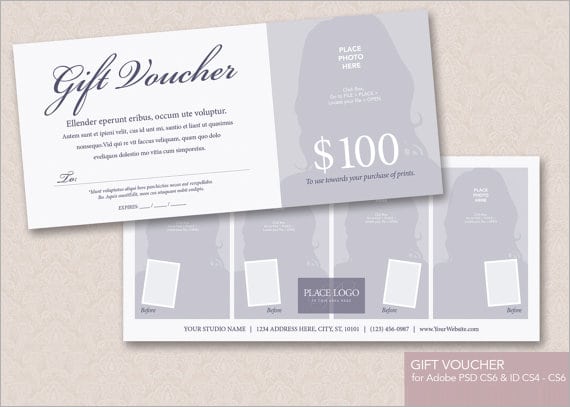
Gift Voucher Template Example


Editable Gift Voucher Design

Business Gift Voucher Sample

Simple Gift Voucher Template
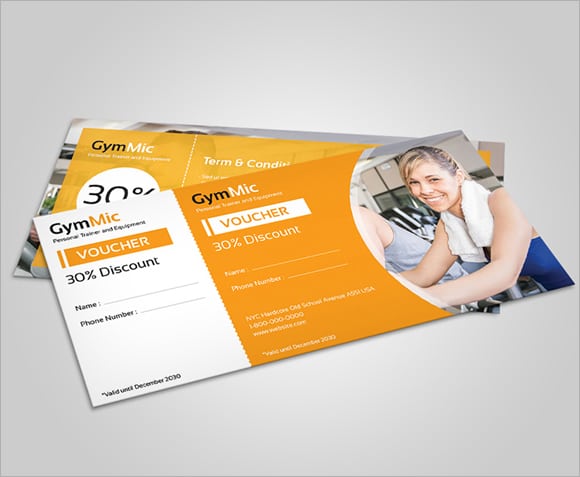
Gym Gift Voucher Template
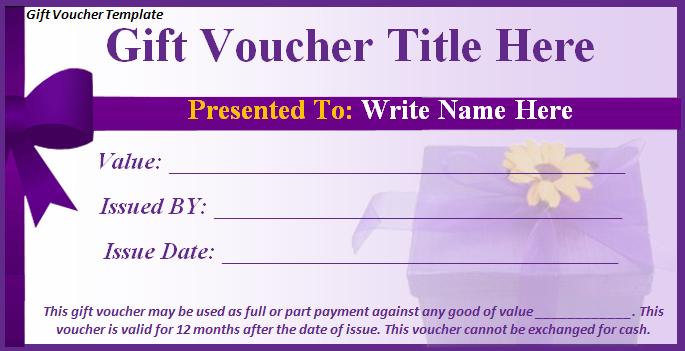
Editable Gift Voucher Template for Word

Gift Voucher Template FAQs
What should a gift voucher include?
Include the issuer, value or benefit, unique code, redemption method, issue date, lawful conditions, and clear contact details.
Can a gift voucher expire?
Rules vary. Some jurisdictions prohibit or restrict expiry for paid vouchers, so check current local consumer law.
Can the recipient use part of the value?
That depends on policy and law. Explain how the remaining balance is recorded and accessed.
How can duplicate redemption be prevented?
Validate every code against a central record and update its balance immediately after use.
Should a voucher be sent as a Word file?
No. Keep Word for the controlled master and send the recipient a stable PDF or image.
Are gift vouchers refundable for cash?
The answer depends on the terms and mandatory local rights. State the policy clearly without limiting legal entitlements.
Can I personalize the hosted template?
Yes. Customize a copy with the recipient, message, value, code, brand, and verified terms.
Are external downloads guaranteed?
No. Third-party availability, pricing, security, and licenses can change.