
A packing list can be a family’s safeguard against a forgotten charger-or a commercial document that tells a warehouse, carrier, customer, and customs team exactly what is inside a shipment. The same name is used for both, but the information and consequences are very different.
These seven free packing list templates include travel, children’s, college, blank, and shipping-oriented examples, plus an editable Word download. Start by choosing the correct type. A vacation checklist should reduce stress; a commercial packing list should support identification, handling, reconciliation, and trade documentation.
Personal Packing List or Commercial Packing List?
A personal list organizes clothing, documents, medication, electronics, toiletries, and activity-specific items. It can include reminders such as charging devices or locking the house.
A commercial packing list describes packages and goods. It may identify the seller, buyer, consignee, shipment reference, package count, contents, quantities, weights, measurements, marks, and origin. It is not automatically an invoice, bill of lading, customs declaration, or certificate of origin.
Build a Travel List Around the Trip
Do not begin with a giant universal checklist. Begin with the destination, length, weather, accommodation, transport, planned activities, dress requirements, laundry access, baggage limits, and travelers’ needs. A three-day city trip and a two-week camping journey require different systems.
Create categories such as documents, clothing, footwear, toiletries, health, electronics, work or study, activities, children, and items to buy on arrival. Add quantities only after planning outfits and schedules.
The Three-Zone Method
Separate items into:
- Carry-on essentials: documents, necessary medication, valuables, communications, and a basic change of clothes.
- Checked or main luggage: replaceable clothing, larger toiletries, and activity equipment permitted by the carrier.
- Leave behind: prohibited, unnecessary, highly valuable, or easy-to-buy items.
This prevents the list from becoming an undifferentiated inventory. Check current airline, rail, cruise, venue, and border rules directly with official sources because limits can change.
Documents and Money
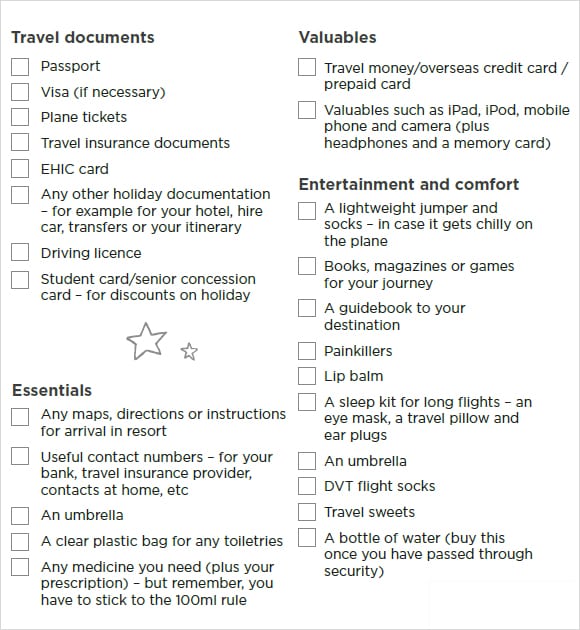
Confirm passports, visas, identification, tickets, booking details, insurance information, driver documents, permits, and emergency contacts well before departure. Requirements depend on citizenship, destination, purpose, and transit route; a template cannot determine eligibility.
Store copies securely and separately where appropriate. Avoid putting full document numbers, passwords, card numbers, or financial credentials on a paper list that could be lost. Use secure approved storage for sensitive information.
Medication and Health Items
Necessary medicine belongs in the planning process early. Keep it in original labeled packaging where required, carry an appropriate supply, and check storage conditions. Destination and transport rules can restrict some medicines or medical devices.
Seek current advice from the relevant authorities and qualified healthcare professionals. A general packing template is not medical or travel advice. Include prescriptions, clinician documentation, accessibility equipment, and contingency supplies when applicable.
Packing for Children
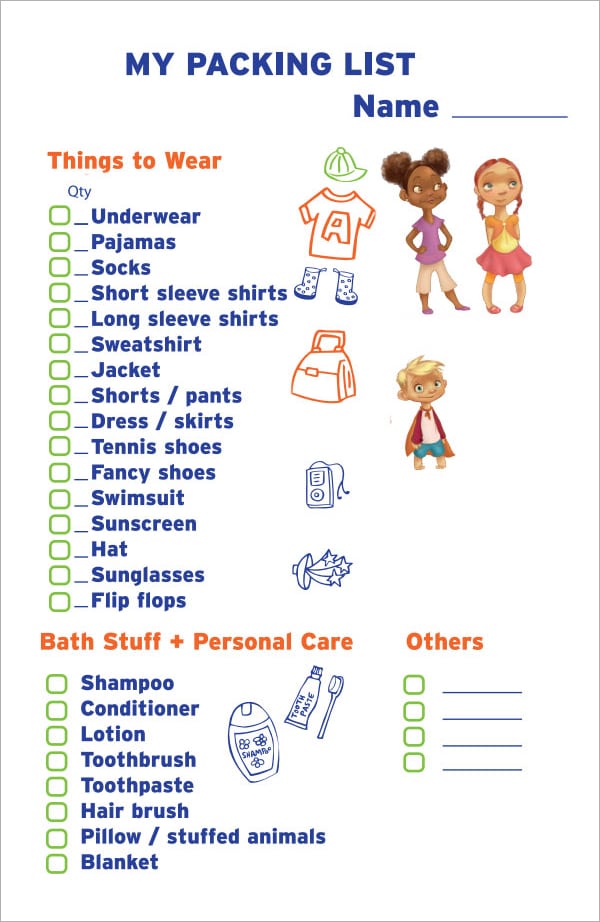
For children, plan by routine: sleep, meals, hygiene, travel time, weather, activities, comfort, and emergencies. Use age-appropriate quantities and involve older children in checking their own list.
Keep essential snacks, wipes, clothing changes, comfort items, and required medication accessible rather than buried in the main luggage. Label belongings discreetly; avoid displaying a child’s full name and private contact information openly.
College and Dorm Packing
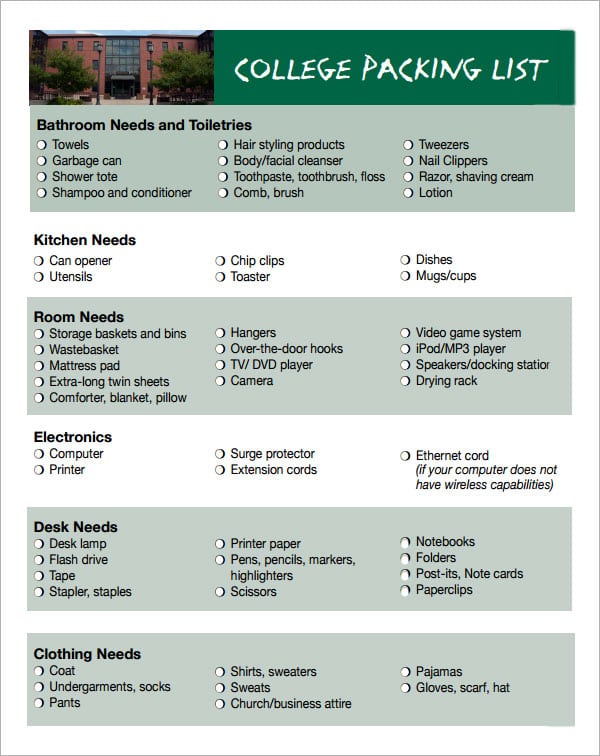
Check the institution’s housing guide before buying anything. Residence halls often specify mattress size, room dimensions, included furniture, appliance restrictions, fire-safety rules, and prohibited items. Coordinate with roommates to avoid duplicate equipment.
Organize the move by room function: bedding, bath, laundry, study, storage, basic kitchen items, clothing, health, documents, and permitted electronics. Mark boxes by destination and unpacking priority. Keep identity, enrollment, financial, and prescription documents with the student rather than in an unattended box.
Commercial Packing List Essentials
A shipment packing list commonly contains:
- Exporter or seller and buyer or consignee details
- Packing-list number and date
- Purchase order, invoice, shipment, or booking reference
- Transport details where available
- Package numbers, types, and shipping marks
- Item descriptions, SKUs, model numbers, and quantities
- Net and gross weight with units
- Package dimensions or volume
- Country of origin where required
- Special handling information
- Authorized preparer or declaration where applicable
Requirements vary by transaction, carrier, destination, goods, and law. Confirm current instructions with the buyer, freight forwarder, carrier, customs broker, and relevant authorities.
Number Every Package
Use markings such as 1 of 6, 2 of 6, and so on, and connect each package to its line items. If a carton is missing or damaged, the recipient can identify what should have been inside without opening every other package.
For mixed pallets or nested packages, state the hierarchy clearly. Keep shipping marks consistent between the physical package, packing list, invoice, labels, and transport documents.
Weights and Measurements
Distinguish net weight-the goods without packaging-from gross weight, which includes packaging. State the unit every time. Record dimensions in a consistent order and name the unit. Transposed numbers or mixed pounds and kilograms can cause rating, handling, and customs problems.
Use measured figures from an appropriate calibrated process rather than guesses. If the carrier calculates chargeable weight differently, the commercial packing list should still report accurate physical information under the applicable requirements.
Commercial Description Quality
“Parts,” “samples,” or “merchandise” may be too vague. Use an accurate plain-language description supported by item codes, materials, model, and intended use where required. The packing list should align with the commercial invoice without pretending to determine tariff classification or origin rules.
Customs classification, valuation, origin, sanctions, dangerous goods, and licensing are specialist compliance matters. Obtain qualified guidance; do not infer them from a generic template.
Reconcile Packing List, Invoice, and Order
Before dispatch, compare the purchase order, picked quantities, packed quantities, commercial invoice, and packing list. Resolve shortages, substitutions, back orders, free items, and split shipments. The customer should not have to guess why the documents differ.
A packing list may omit prices while the commercial invoice contains values, but identifiers and quantities should still align. Use the same shipment reference across documents and keep the final signed or approved version in the shipment record.
Dangerous, Fragile, and Temperature-Sensitive Goods
Dangerous goods require specialized classification, packaging, marking, labeling, documentation, and trained personnel. A general packing list is not a dangerous-goods declaration and must not be used as a substitute.
For fragile, perishable, temperature-controlled, high-value, or regulated goods, state handling information accurately and follow the carrier’s approved process. Record seals, data loggers, lot numbers, or serial numbers where the transaction requires them.
Warehouse Packing Workflow
- Release an authorized order for picking.
- Verify item code, description, quantity, and condition.
- Select packaging suited to the goods and route.
- Pack, count, weigh, and measure.
- Number packages and apply correct marks or labels.
- Prepare the packing list from the verified contents.
- Perform an independent check where risk warrants it.
- Place or transmit documents according to instructions.
- Record dispatch and retain the final version.
Do not prepare the final list from what was supposed to be packed. Prepare it from what was actually verified inside each package.
Where to Put the Commercial Packing List
Follow carrier and customer instructions. One copy may travel in a document pouch on a designated package while another is transmitted electronically. Avoid exposing confidential commercial information unnecessarily on the outside of a shipment.
For multi-package consignments, clearly identify which package carries documents. Keep a copy with the shipper. If an electronic portal is used, confirm successful upload and version status.
Using a Packing List for Moving House
Number boxes by room and priority, then list the main contents without recording valuables in a way visible to everyone. For example, “Kitchen 3 of 8-baking equipment” is more useful than “miscellaneous.” Mark boxes that should be opened first.
Keep identity documents, medicine, keys, basic tools, chargers, cleaning supplies, and the first night’s essentials with you. Photograph valuable items and note condition where insurance or mover documentation calls for it.
How to Customize the Template
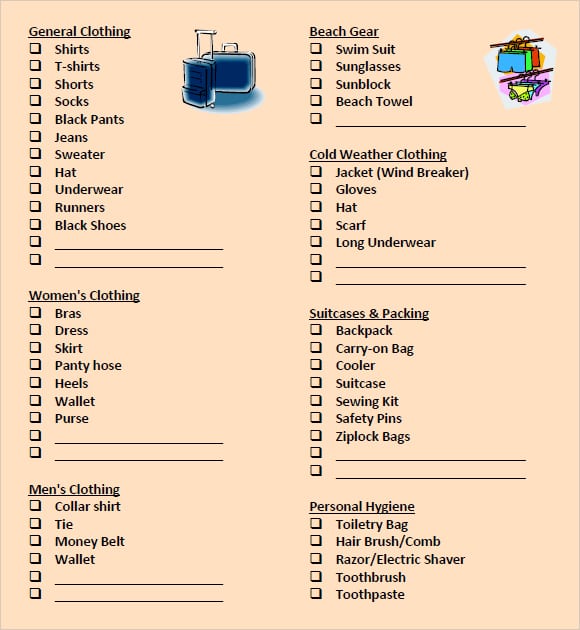
For travel, add trip details and remove categories you will not use. Include columns for quantity, packed, carry-on, checked bag, and last-minute confirmation. A “do before leaving” section can cover charging, downloads, pets, appliances, windows, and transport.
For shipping, add organization details, references, package lines, units, weights, dimensions, marks, declarations, and authorization. Protect calculations in an electronic file and use data validation for units and status. Save an untouched master and issue controlled versions.
Two-Stage Personal Packing
Use the checklist once while gathering items and again when each item enters the bag. Marking something “ready” is not the same as packing it. Add a final departure check for items still in use, such as a phone, charger, toothbrush, refrigerator medicine, glasses, or keys.
On the return journey, use the same list to check hotel drawers, charging outlets, safes, bathrooms, closets, and rental vehicles. A packing list can prevent loss in both directions.
Common Packing List Mistakes
- Using a generic list without adapting it to the trip or shipment
- Packing essential documents in inaccessible luggage
- Ignoring current baggage or border restrictions
- Mixing sensitive information into a lost paper checklist
- Failing to number commercial packages
- Confusing net and gross weight
- Using vague item descriptions
- Letting documents disagree on quantities or references
- Listing intended rather than verified contents
- Skipping a physical or independent final check
Final Check
For a trip, review the itinerary day by day and confirm essentials are accessible. For a shipment, compare the final documents with marked packages and actual contents. The best list is not the longest one; it is the one that reflects the real journey or consignment accurately.
Preview and Download the Packing List Templates
The original previews and available destinations are preserved below. Verify any external file, format, security, and license before use.
Editable Packing List Template


Packing List for Kids

College Packing List
Personal Packing List Sample
Travel Packing List
Blank Commercial Packing List
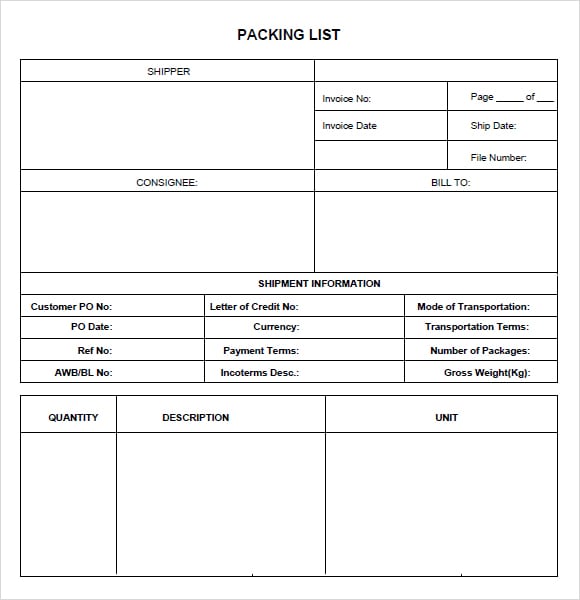
Sample Shipping Packing List
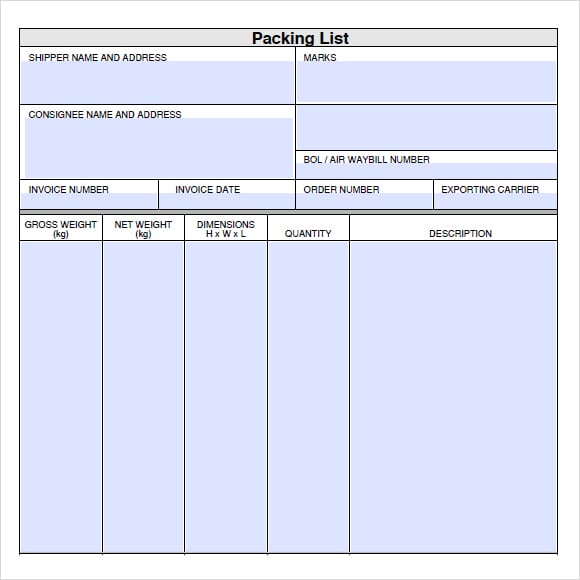
Packing List Template FAQs
Is a packing list the same as a commercial invoice?
No. A packing list describes packages and contents; an invoice records commercial values and sale terms.
What belongs on a shipping packing list?
Include parties, references, packages, marks, descriptions, quantities, net and gross weights, dimensions, and required handling details.
What is the difference between net and gross weight?
Net weight covers the goods; gross weight includes the goods and packaging.
Should every package be numbered?
Yes, numbering such as 1 of 6 makes missing or damaged packages easier to identify and reconcile.
Can I use a travel list for children?
Yes, but adapt it to age, routine, medication, comfort, transport, weather, and planned activities.
What should stay in carry-on luggage?
Keep essential documents, necessary medicine, valuables, communications, and critical basic supplies accessible, subject to current rules.
Can I edit the hosted template in Word?
Yes. Customize a copy for personal travel, moving, college, or commercial shipment needs.
Are external downloads guaranteed?
No. Third-party availability, formats, security, and licenses can change.