
A police report is an official record created or accepted by a law-enforcement agency. It may document a reported incident, observations, statements, property, injuries, investigative actions, and other facts relevant to the agency’s duties. Because procedures and forms differ by jurisdiction, no general police report template can replace the official reporting channel or an agency-approved records system.
The sample police report and incident report templates on this page are provided for education, training, internal planning, writing practice, security documentation, and understanding common report fields. Members of the public should use the form or reporting method required by the police department handling the incident. Never use a template to impersonate an officer, fabricate evidence, create a false report, or present an unofficial document as a genuine police record.
When to Contact Police Instead of Using a Template
If there is immediate danger, violence, a medical emergency, a crime in progress, a missing person at urgent risk, or another situation requiring rapid assistance, contact the appropriate emergency service for your location.
For a non-emergency incident, use the local agency’s approved telephone line, online reporting portal, or in-person process. Some incidents cannot be reported online, and eligibility rules vary. A private template does not submit a report or generate an official case number.
If you need a copy of an existing police report, request it from the agency or records office that holds it. Release rules, identification requirements, fees, redactions, and waiting periods differ.
What These Templates Can Be Used For
Appropriate uses may include:
- Teaching objective report writing
- Training security or safety personnel
- Creating an internal incident form for a workplace
- Practicing chronological narrative writing
- Planning fields for an authorized agency system
- Understanding information requested in a report-copy application
- Documenting facts before speaking with the proper authority
- Preparing fictional classroom or writing exercises clearly labeled as such
Organizations creating internal incident reports should label them accurately. A store, school, employer, or security company report is not automatically a police report.
Common Sections in an Incident Report
Official formats vary, but many reports organize information into recognizable categories.
Agency and Case Information
This area may contain the agency name, case or incident number, classification, reporting date, location code, and assigned personnel. Only authorized systems should generate official identifiers.
Date, Time, and Location
A report may distinguish between when an incident occurred, when it was discovered, and when it was reported. If the precise time is unknown, the narrative should explain the known range rather than inventing precision.
Locations may include an address, intersection, building, room, vehicle, landmark, or digital environment. Include enough detail to identify the place without exposing unrelated private information.
People Involved
Depending on the report, participants may be identified as reporting person, complainant, victim, witness, subject, suspect, owner, guardian, officer, or another role. Labels should reflect verified status and applicable procedure rather than assumption.
Incident Classification
An agency may use legal or administrative codes to classify events. Do not guess criminal charges or official codes. The narrative should describe observable facts; authorized personnel determine classifications according to law and policy.
Property and Evidence
Property sections may record description, ownership, serial numbers, estimated value, condition, and whether an item was lost, stolen, damaged, recovered, or held. Evidence handling requires authorized procedures and chain-of-custody controls that a generic document cannot provide.
Witness Information
Record what a witness personally observed and distinguish it from information heard from someone else. Direct quotations should be accurate and used only when necessary. Contact information must be protected according to policy and law.
Narrative
The narrative explains what happened in a clear sequence. It should separate observation, statement, action, and conclusion. A good narrative is specific without being dramatic.
Actions Taken
This section may note notifications, interviews, photographs, searches, referrals, medical assistance, property handling, arrests, citations, or follow-up. Only record actions that actually occurred.
Writing an Objective Narrative
Objective does not mean vague. It means the report describes facts, sources, and actions without exaggeration or unsupported judgment.
Compare:
Vague and judgmental: The suspicious man acted crazy and obviously stole the phone.
More specific: The reporting person stated that the individual picked up the phone from the counter and left through the east door. The writer did not personally observe the incident.
The second version identifies the source and avoids claiming proof that has not been established.
A Chronological Writing Method
When the facts are complicated, use a timeline:
- How the incident came to attention
- Who was present
- What was first observed
- What each person reported
- What actions were taken
- What property or evidence was identified
- What happened next
- What follow-up remains
Chronology makes a report easier to review. If the narrative must move backward to explain context, signal the change clearly.
Facts, Statements, and Inferences
These categories should not be blended.
Observed fact: “The north window was broken, and glass was visible on the interior floor.”
Reported statement: “The owner stated that the window was intact at 8:00 p.m.”
Inference requiring support: “Entry may have occurred through the north window.”
A report should identify who knows what and how they know it. Avoid presenting allegations as proven findings.
Describing People and Property
Use relevant, observable descriptors and follow agency policy. Avoid stereotypes, ridicule, or unnecessary commentary. When identity is unknown, make that clear.
Property descriptions should include details that distinguish the item: make, model, color, size, serial number, identifying marks, or documented value. Do not publish serial numbers or sensitive identifiers publicly.
Handling Names, Addresses, and Sensitive Data
Police and incident reports can contain highly sensitive personal information. Access, disclosure, redaction, retention, and victim-protection rules vary by law and agency.
For training examples, use fictional names and clearly label the material as a sample. Do not upload real case information to an unsecured template or share completed forms casually. Organizations should define who can create, view, edit, export, and delete records.
Corrections and Supplemental Reports
Official records should preserve history. If an error is discovered, follow the authorized amendment or supplemental-report process rather than deleting or silently rewriting the original.
A correction should identify what changed and why. New information discovered later may belong in a supplement linked to the original case. Procedures differ, so follow agency policy.
Police Report Versus Incident Report
A police report is associated with a law-enforcement agency and its authority. An incident report is a broader term used by schools, employers, hospitals, security teams, insurers, venues, and other organizations.
An internal incident report may later support a police report, insurance claim, safety review, or disciplinary process, but it remains a separate record. Labeling matters.
Police Report Versus Report Request Form
Several downloads below are examples of forms used to request a copy of an existing report. A report request form does not create a new incident report. It asks an agency to search for and potentially release an existing record.
The requesting person may need a case number, identification, relationship to the incident, authorization, and a fee. Some records cannot be released or may be redacted.
Information to Gather Before Making a Report
If it is safe and lawful, organize available information before contacting the appropriate authority:
- Date and approximate time
- Location
- Names and contact details of involved people
- Descriptions of events in chronological order
- Property descriptions and serial numbers
- Photographs or video already in your lawful possession
- Names of potential witnesses
- Relevant documents or transaction records
- Immediate safety or accessibility needs
Do not trespass, confront a suspected person, alter a scene, access someone else’s accounts, or put yourself in danger to gather information.
What Not to Do
- Do not file knowingly false information.
- Do not use an unofficial template to claim police authority.
- Do not manufacture statements, signatures, case numbers, or evidence.
- Do not edit photographs or records to change their meaning.
- Do not publish victim, witness, or suspect information irresponsibly.
- Do not assume an accusation proves guilt.
- Do not ignore emergency-reporting instructions in favor of paperwork.
- Do not use a generic template where an official form is required.
Review Checklist for Training or Internal Reports
Before finalizing an authorized internal document, ask:
- Is the document labeled accurately?
- Are dates and times internally consistent?
- Are observations separated from statements?
- Is each statement attributed to its source?
- Does the narrative follow a readable sequence?
- Are names and identifiers spelled correctly?
- Are unsupported conclusions removed?
- Is sensitive information protected?
- Are attachments and references accounted for?
- Has the record been stored according to policy?
Download the Police Report and Request Form Samples
The previews and links below have been preserved as reference materials. External agency documents may change, move, or have location-specific requirements. Confirm the current form directly with the relevant agency before relying on it.
Blank Police Report Template Word
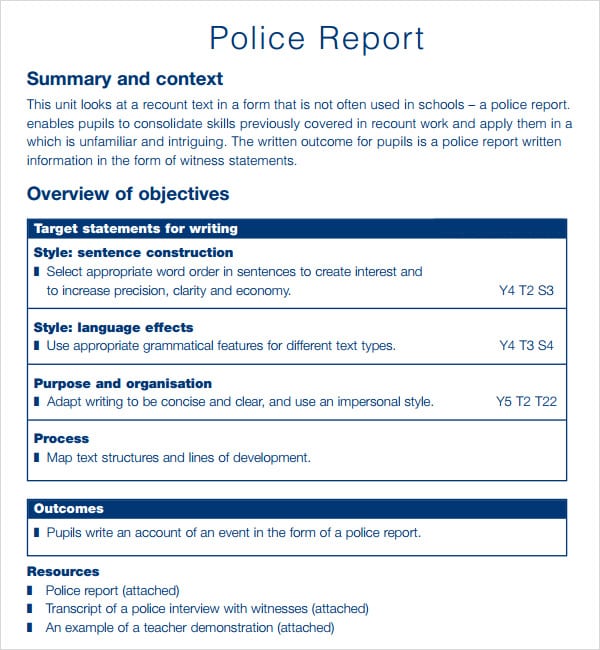

Police Report Form Template
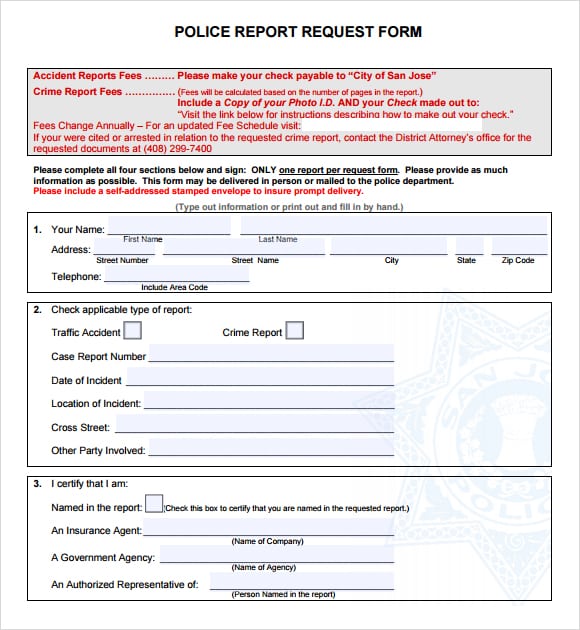
Sample Police Report Template
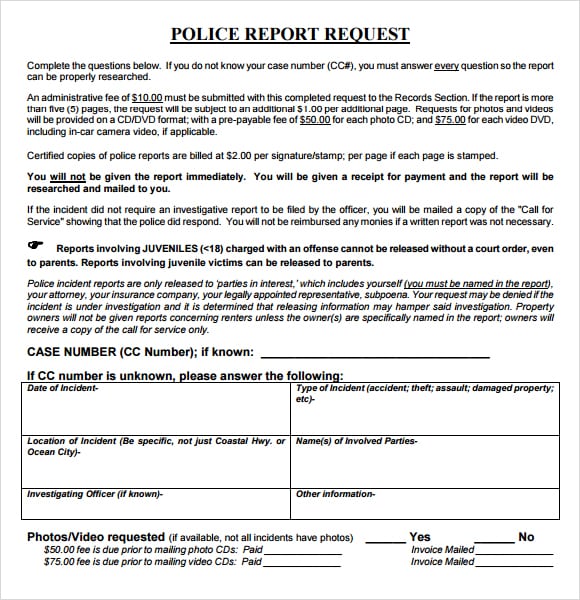
Word Police Report Template
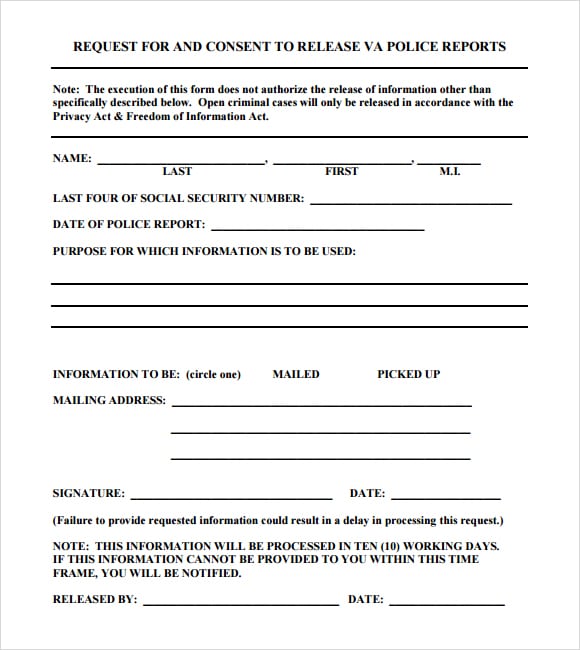
Police Report Example
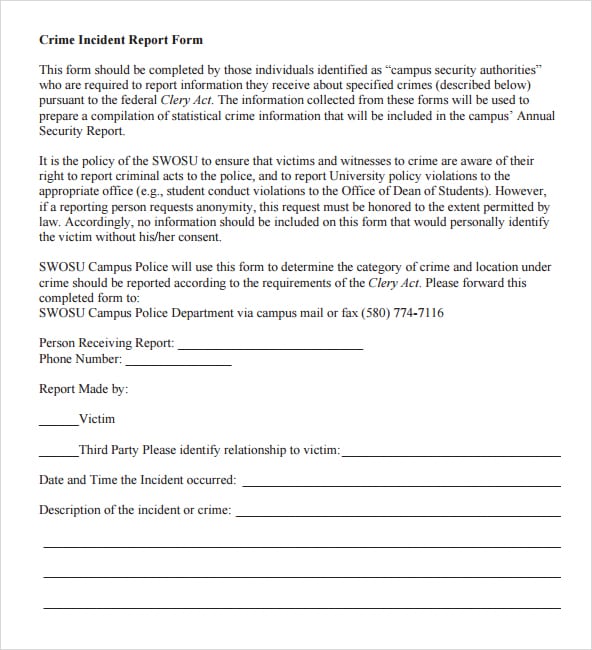
Editable Police Report Template


Police Report Template FAQs
Can this template create an official police report?
No. Only the appropriate law-enforcement agency can accept or create an official report through its authorized process.
When should I call emergency services?
Contact the emergency service for your location when there is immediate danger, violence, serious injury, a crime in progress, or another urgent threat.
Can I use a sample to report a crime online?
Use the official online portal provided by the agency. Eligibility rules and required fields vary, and a downloaded sample does not submit information.
What makes a report objective?
It identifies sources, describes observable facts, distinguishes statements from observations, and avoids unsupported conclusions or emotional labels.
Is an internal security report a police report?
No. It may document an incident for an organization, but it does not become a police record unless handled through the appropriate agency process.
Can I request a copy of a police report?
Often yes, subject to agency rules, privacy law, eligibility, fees, redaction, and record availability. Contact the agency holding the report.
Should a report include witness contact information?
Official processes may require it, but the information must be protected and disclosed only as allowed. Do not publish it in a public sample.
Can a police report be corrected?
Agencies generally have procedures for corrections or supplemental information. Do not alter an official record yourself; contact the responsible agency.
Can I use the templates for training?
Yes, when clearly labeled as fictional or instructional and when no real confidential case data or false official representation is involved.
Are all six downloads current official forms?
Not necessarily. Some are external historical examples or request forms. Verify current requirements and forms directly with the relevant agency.